
Pond & Waterfall Guides
How-to guides, pond advice and water feature insights - written by NZ's only Certified Aquascape Contractor, serving Selwyn, Christchurch, Canterbury & beyond.
Cloudy Pond Water: QuickFix vs Rapid Clear, and When to Use Each
Not all cloudy water is the same - here's how to tell green from grey, and which Aquascape product actually fixes each one.
What Causes Cloudy Pond Water?
Cloudy water usually comes down to one of two things: a build-up of ammonia, nitrite and phosphate from waste (making it hazy or green), or fine suspended particles disturbed from the pond floor (making it grey or brown). Identifying which one you have is what determines which treatment actually works.
Cloudy water is the single most common question we get asked, usually somewhere between a slightly worried voice and a phone photo. The good news - it's almost always fixable within a day or two, once you know which product matches the problem.
First, Work Out What Kind of Cloudy
Not all cloudy water is the same, and reaching for the wrong treatment wastes time and product.
Green or hazy, general murkiness → usually a waste/nutrient issue (ammonia, nitrite, phosphate building up)
Grey or brown, suspended particles that won't settle → usually physical debris - fine silt, disturbed sediment, or organic matter suspended in the water column
These need different treatments.
Aquascape QuickFix Pond Gummy - For Waste-Driven Cloudiness
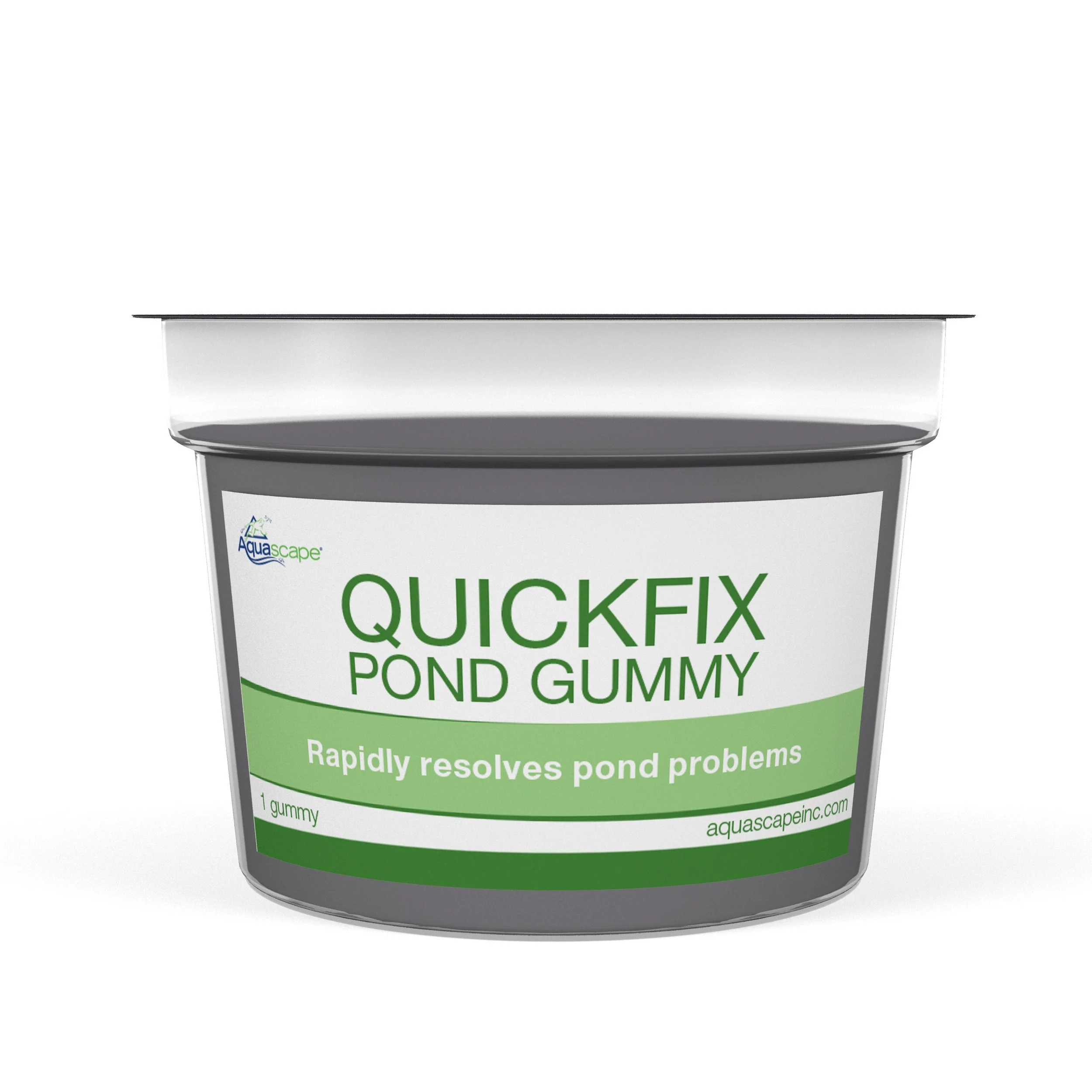
Aquascape QuickFix Pond Gummy is an all-in-one treatment gummy that targets ammonia, nitrite, and phosphate directly, while helping control organic waste and debris. It dissolves slowly once added, releasing treatment steadily rather than all at once, and works best once water temperatures sit above roughly 7°C - which covers pretty much all of a Canterbury spring through autumn.
Use this when the water's gone hazy or green rather than gritty - when the underlying issue is a nutrient imbalance rather than physical particles.
Aquascape Rapid Clear Flocculant - For Suspended Particles
Aquascape Rapid Clear Flocculant works differently - it's a flocculant, meaning it clumps fine suspended particles together so they're heavy enough to settle out or get caught in your filter, rather than treating the water chemistry itself. Results typically show within 24 hours. It pairs well with a fine filter pad in your skimmer, which catches the clumped debris as it moves through.
Use this after something's physically disturbed the pond bottom - a clean, heavy rain runoff, or general seasonal turnover - where the water's gone grey or brown rather than green.
One thing worth knowing: don't dose Rapid Clear at the same time as a bacteria treatment. The flocculation process will clump the bacteria along with everything else, working against you rather than for you. Leave 48 hours between the two.
When It's Neither - Check Your Bacteria First
If cloudiness keeps coming back every few weeks despite treatment, that's usually a sign the underlying bacteria population is too low to keep up with the pond's waste load long-term - QuickFix and Rapid Clear solve the symptom quickly, but a consistent beneficial bacteria dosing routine is what stops it recurring. We've covered that in a separate post on beneficial bacteria dosing. And if the issue is sludge on the floor rather than cloudiness in the water column, our Pond Sludge Remover Packs are the more direct fix - see our post on sludge build-up.
Quick Reference
Green or hazy, general murkiness: QuickFix Pond Gummy
Grey or brown, suspended particles: Rapid Clear Flocculant
Sludge sitting on the pond floor: Sludge Remover Packs
Keeps coming back after treatment: check your beneficial bacteria dosing routine
Both products are available in our online store, sized for typical residential ecosystem ponds. If you're not sure which one matches what you're seeing, send us a photo and we'll point you the right way.
Why Your Ecosystem Pond Needs Beneficial Bacteria - And How Much
Bacteria is the single biggest factor in whether your pond stays clear or turns into a maintenance headache - here's which product to use and when.
Why Does My Ecosystem Pond Need Beneficial Bacteria?
Beneficial bacteria breaks down fish waste, uneaten food, and organic debris before it turns into sludge or clouds your water. Without enough of it, waste builds up faster than your pond's biology can process it - which is why consistent bacteria dosing is the single most important weekly task for keeping an ecosystem pond clear and balanced.
If you've had an ecosystem pond for a season or two, you've probably heard us talk about beneficial bacteria. It's not a sales pitch - it's the biggest factor in whether your pond stays clear, or slowly turns into a maintenance headache.
What Beneficial Bacteria Actually Does
An ecosystem pond is designed to be mostly self-sustaining, but "mostly" is the key word. Bacteria living in your gravel, rock, and biological filter break down fish waste, uneaten food, and organic debris before it builds up as sludge. In a young pond, or one that's just come through a cold Canterbury winter, that bacteria population is low - which is exactly when problems start.
Without enough bacteria, waste accumulates faster than the ecosystem can process it. Water clouds, algae gets an opening, and sludge builds up on the pond floor. None of that means your pond is poorly built - it means the biology hasn't caught up yet, which is why Aquascape build their whole bacteria range around keeping that colony topped up rather than just fixing problems after they show up.
Spring Is the Critical Window
Here in the South Island, spring (September through November) is when pond bacteria populations are at their lowest. Water temperatures are climbing, fish are more active and eating more, but the bacterial colony that processes all that extra waste hasn't built back up yet. This is the gap that causes the "why is my pond suddenly cloudy" call every spring.
Which Product for Which Job
We stock four Aquascape bacteria products, and each has a specific role:
Aquascape Pond Starter Bacteria → for spring start-up or a brand-new pond. This is formulated to establish the biological ecosystem quickly, rather than just maintain one that's already running.
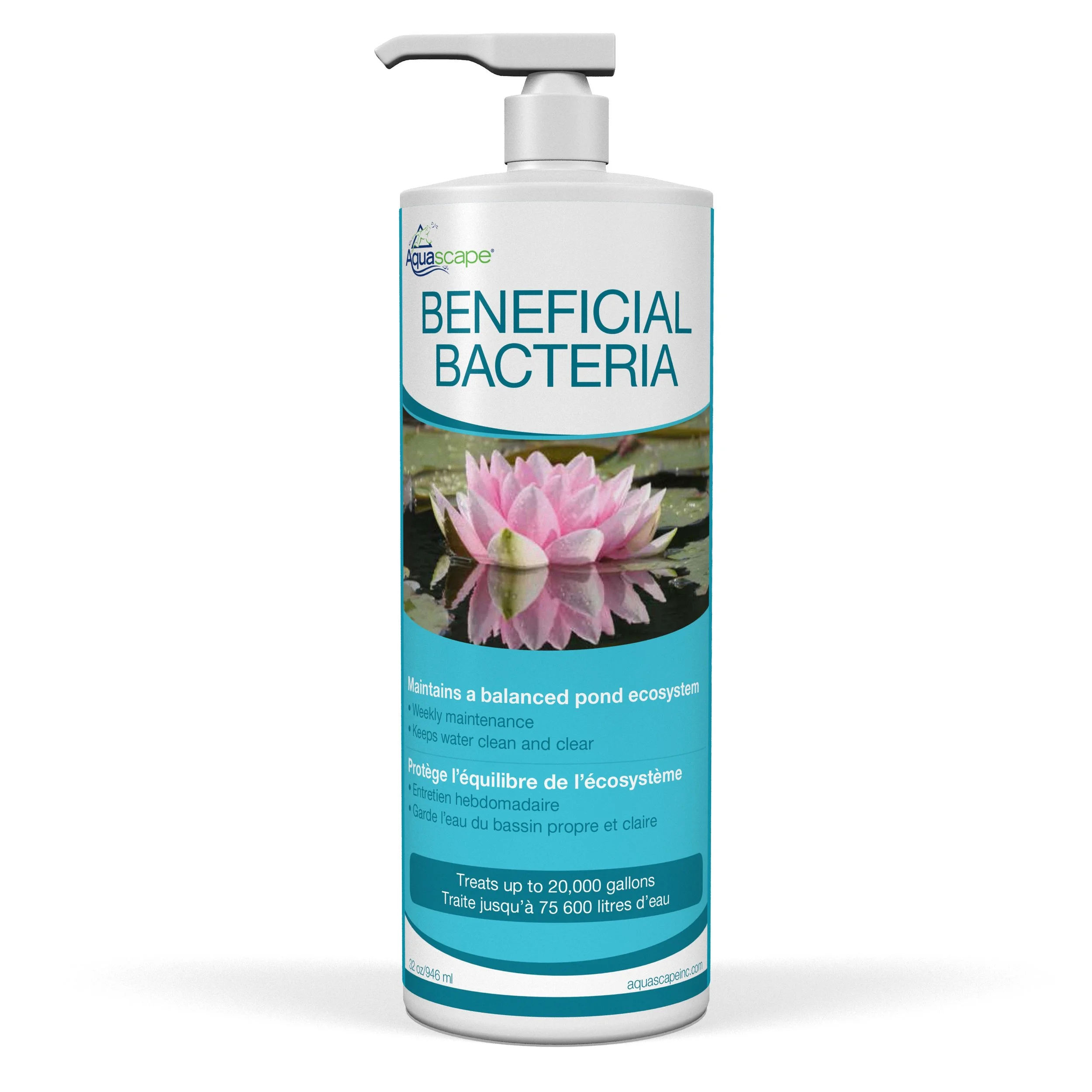
Aquascape Beneficial Bacteria (liquid) → your weekly maintenance dose once the pond is established. Eight strains of concentrated bacteria plus enzymes to keep the balance steady through the growing season.
Aquascape Beneficial Bacteria Concentrate → the same job as the liquid, in a more concentrated form - a good option if you're treating a larger pond and want fewer bottles to store.
Aquascape Beneficial Bacteria Bubble Tabs → the simplest option. No measuring, no pouring - toss a tab in and it dissolves and disperses on its own. Good for anyone who wants a fit-and-forget routine.
If sludge on the pond floor is the more pressing issue rather than water clarity, our separate post on sludge build-up covers the dedicated Pond Sludge Remover Packs for spot-treating that directly.
Getting the Dosing Right
Under-dosing is the most common mistake we see - people treat "when they remember" rather than on a schedule, and the bacteria population never gets ahead of the waste load. For new ponds or spring start-up, treat twice weekly for the first two weeks, then settle into a weekly maintenance dose. If you'd rather not think about it at all, our Aquascape Automatic Dosing System handles the schedule for you.
Bacteria only works above roughly 10°C, so once the water's cold through winter, dosing effectively pauses until spring anyway - one less thing to worry about over the colder months.
The Bottom Line
Beneficial bacteria isn't an optional extra for an ecosystem pond - it's the maintenance step that determines whether everything else (clarity, plant health, fish health) works the way it's supposed to. Get the spring dose right, keep a weekly rhythm through the season, and most of the problems people associate with pond ownership simply don't show up.
Browse the full bacteria range in our online store, or get in touch if you're not sure which product suits your pond.
How to Treat String Algae in a New Zealand Pond
String algae is one of the most common questions we get from pond owners. Here's what's causing it, when it's a problem, and how to deal with it the right way.
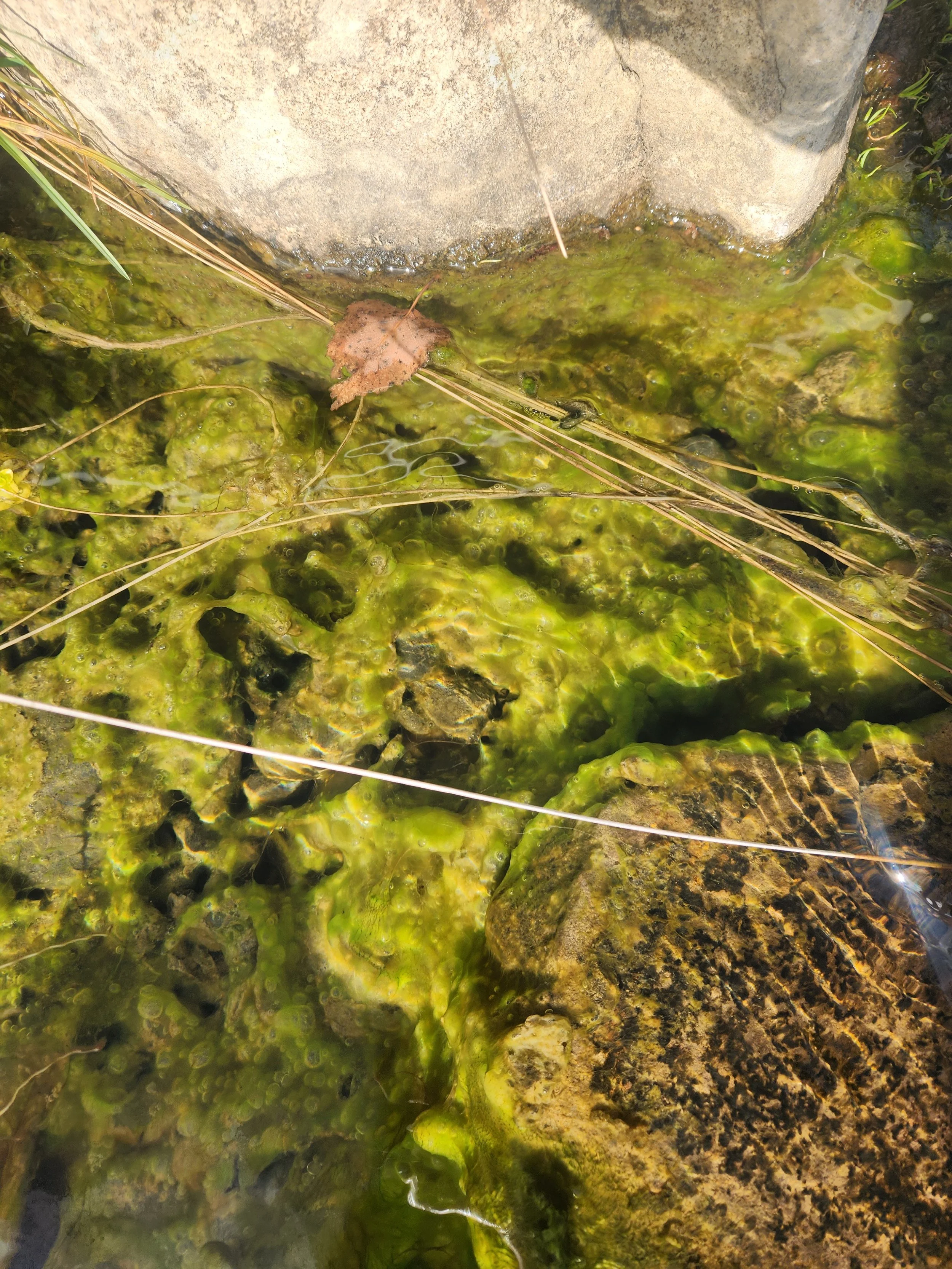
String algae is a filamentous algae that grows on rocks, waterfalls and pond surfaces. It thrives when there are excess nutrients and sunlight, and is most common in new ponds before the ecosystem is fully established. In most cases it can be managed through manual removal, consistent beneficial bacteria treatment, and improving biological balance - without harsh chemicals.
String algae is one of the most common things pond owners contact us about. Those green, hair-like strands clinging to your rocks, trailing through your waterfall, or forming mats across the surface - it can look alarming, especially if your feature was crystal clear when it was first built.
The good news is that string algae is almost always manageable, and understanding what's causing it makes all the difference. This post covers both ecosystem ponds and pondless waterfalls, and what you can do about it in New Zealand conditions.
First - Is String Algae Actually a Problem?
Not always. A small amount of string algae is a completely normal part of a healthy, living water feature. It's one of the first signs that your pond or waterfall is ecologically active - it absorbs excess nutrients from the water and provides some oxygenation and habitat for micro-organisms.
Aquascape, the ecosystem technology we build every Southern Waterscapes feature on, describes string algae as the weeds in a new garden: they dominate early on, before the ecosystem is fully established, and naturally reduce over time as plants, bacteria, and biological balance take hold.
So if you've got a newer feature and you're seeing string algae — that's expected. It doesn't mean something has gone wrong.
String algae becomes a problem when:
It forms thick mats that clog your waterfall or filters
It covers rocks and significantly changes the appearance of the feature
It starts decomposing in the water, reducing oxygen and stressing fish
That's when it's time to act.
Why Is It There? The Main Causes
String algae thrives when there are excess nutrients in the water and plenty of sunlight. In a healthy, balanced ecosystem pond or pondless waterfall, the plants and beneficial bacteria compete with algae for those nutrients and keep it in check. When the balance tips, algae wins.
Common triggers in New Zealand conditions:
Spring growth flush - the most common one. As water temperatures rise in Canterbury spring, algae responds fast. Your biological filtration and bacteria haven't fully reactivated yet after winter, so algae gets a head start. This usually corrects itself as the season progresses.
New features - a freshly built pond or pondless waterfall doesn't have an established colony of beneficial bacteria yet. Algae fills the gap while the ecosystem matures. Typically most noticeable in the first season.
Too much sunlight - a feature with little shade and full Canterbury summer sun will produce more algae than one with some coverage. Aquatic plants like water lilies help here, both by shading the water and by competing directly for nutrients.
Leaf and organic debris - Canterbury's deciduous trees shed heavily in autumn, and leaf matter breaking down in the water is a direct nutrient source for algae. Keeping debris cleared from around the feature makes a real difference.
Overfeeding goldfish - uneaten food breaks down and adds nutrients. Feed only what your fish will consume in a few minutes.
Underperforming bacteria - beneficial bacteria is the engine of a healthy pond ecosystem. Without enough of it working consistently, nutrients build up and algae capitalises.
What to Do About It - Ecosystem Ponds
Step 1: Remove it manually first
The quickest way to reduce string algae is to physically remove it. Use a pond net, brush, or your hands to pull out large clumps. Getting it out of the water lowers the nutrient load immediately and gives your treatments a better chance of working.
Remove it carefully - disturbing string algae can release spores into the water. Once removed, compost it away from the pond.
Step 2: Treat with the right product
Aquascape's water treatment range is built around multi-formulation products - each bottle contains a powerful blend of ingredients working together, so you're not having to source and add separate products for each job. You switch between products depending on what your pond needs, rather than using them all at once.
For string algae and water clarity issues, the product to reach for is:
Aquascape Clear for Ponds - formulated specifically to address algae and restore water clarity. Contains a blend of beneficial bacteria, phosphate binder, flocculant, and pond detoxifier - multiple bacteria strains working together to address the root cause rather than just the symptom. Fish safe and plant safe.
Once clarity is restored, switch back to Aquascape Maintain for Ponds as your ongoing treatment. Maintain contains the same powerful multi-formulation blend to support healthy biological balance and keep water conditions stable - it's your baseline product for keeping the pond performing well week to week.
If you have an Aquascape auto-dosing system:
Use the SL versions — Clear for Ponds SL and Maintain for Ponds SL. These are formulated for the dosing system and deliver the right amount of treatment automatically every day, so the bacteria and active ingredients are working consistently without you needing to remember.
If you don't have an auto-dosing system:
We stock Clear for Ponds and Maintain for Ponds in standard 473ml pump bottles, designed for existing pond owners to dose manually. These are available directly from our online store.
Step 3: Address the underlying cause
Treatments help, but if the conditions that caused the algae aren't addressed, it'll keep coming back. Think about:
Adding more aquatic plants — water lilies, marginal plants, and submerged oxygenating plants all compete with algae for nutrients. The more plant coverage you have, the less algae will thrive.
Clearing autumn debris promptly — don't let leaf matter sit in or around the pond
Checking your filtration — is the biological filter running properly? Has it been cleaned recently in a way that may have disrupted the bacteria colony?
What to Do About It - Pondless Waterfalls
String algae in a pondless waterfall typically appears on the rocks and spillway rather than floating freely, because there's no standing water body for it to colonise.
The treatment approach is simpler than for ponds - and because all Southern Waterscapes pondless waterfall builds include an Aquascape auto-dosing system as standard, the SL treatment range is what applies here.
Manual removal first
Same as for ponds - physically remove what you can from the rocks. A stiff brush works well for dislodging algae from stonework.
Use the right product for your feature and use it consistently
There are two SL treatments for pondless systems - which one you use depends on your feature:
Aquascape Clean for Fountains & Waterfalls SL - for pondless features that have fish or aquatic plants. Fish safe and plant safe.
Aquascape Prevent for Fountains & Waterfalls SL - for pondless features without fish or plants.
Both work through the auto-dosing system, delivering treatment daily without any effort on your part. Consistency is what keeps algae in check - the dosing system handles that for you.
The Auto-Dosing System: The Easiest Way to Stay on Top of It
The most consistent results we see from clients are from features running an Aquascape auto-dosing system. It delivers the right amount of treatment product into the water daily, automatically - so the beneficial bacteria and water treatments are working constantly, not just when you remember to add them.
For ecosystem ponds, pair the system with Maintain for Ponds SL. For pondless waterfalls, Prevent or Clean for Fountains & Waterfalls SL is the right choice. The dosing system works with all of these - just load the bottle that suits your feature and let it run.
The Aquascape Automatic Dosing System is available through the Southern Waterscapes online store and comes standard on all new builds we complete.
When to Call Us
If your feature has significant string algae that isn't responding to treatment, or if you're unsure whether your filtration is performing properly, it's worth getting us in for an assessment. Sometimes what looks like an algae problem is actually a symptom of undersized filtration, a bacteria colony that needs resetting, or a debris issue in the reservoir.
Our annual clean-out service is also a good reset point - clearing accumulated debris from the system in spring gives your beneficial bacteria a clean slate to work from, and often dramatically reduces algae through the season.
Get in touch if you'd like to discuss your feature or book a clean-out.
Southern Waterscapes Ltd is New Zealand's only Certified Aquascape Contractor, based in Rolleston, Canterbury. Water treatment products are available from our online store.
Sludge Build-Up in Your Pond: What's Normal, and When to Act
A thin layer of sludge is normal - a thick one means your bacteria have fallen behind. Here's how to tell the difference, and which treatment fixes each.
What Causes Pond Sludge Build-Up?
Sludge builds from fish waste, uneaten food, and decomposing organic matter settling on the pond floor faster than your bacteria can break it down. A thin layer is a normal by-product of a healthy ecosystem - it only becomes a problem once bacteria activity can't keep pace with the waste load.
A thin layer of dark sludge on the bottom of an ecosystem pond isn't a fault - it's a normal by-product of a working biological system. The question we get asked isn't really "is this normal", it's "how much is too much".
Where Sludge Actually Comes From
Fish waste, uneaten food, and decomposing organic matter (leaves, dead plant material) settle to the bottom of the pond. In a healthy, well-dosed ecosystem, bacteria break this down faster than it accumulates. A small amount of sludge sitting in the base is simply the balance point of that process - not a sign of a problem.
Sludge becomes an issue when it's outpacing what the bacteria can process: usually after a heavy leaf-drop season, over winter when bacteria activity slows right down, or in a pond that's been under-dosed for a while.
The Maintenance-Level Fix
If sludge is building gradually rather than suddenly, there are two complementary products worth having on hand, depending on how the sludge is showing up:
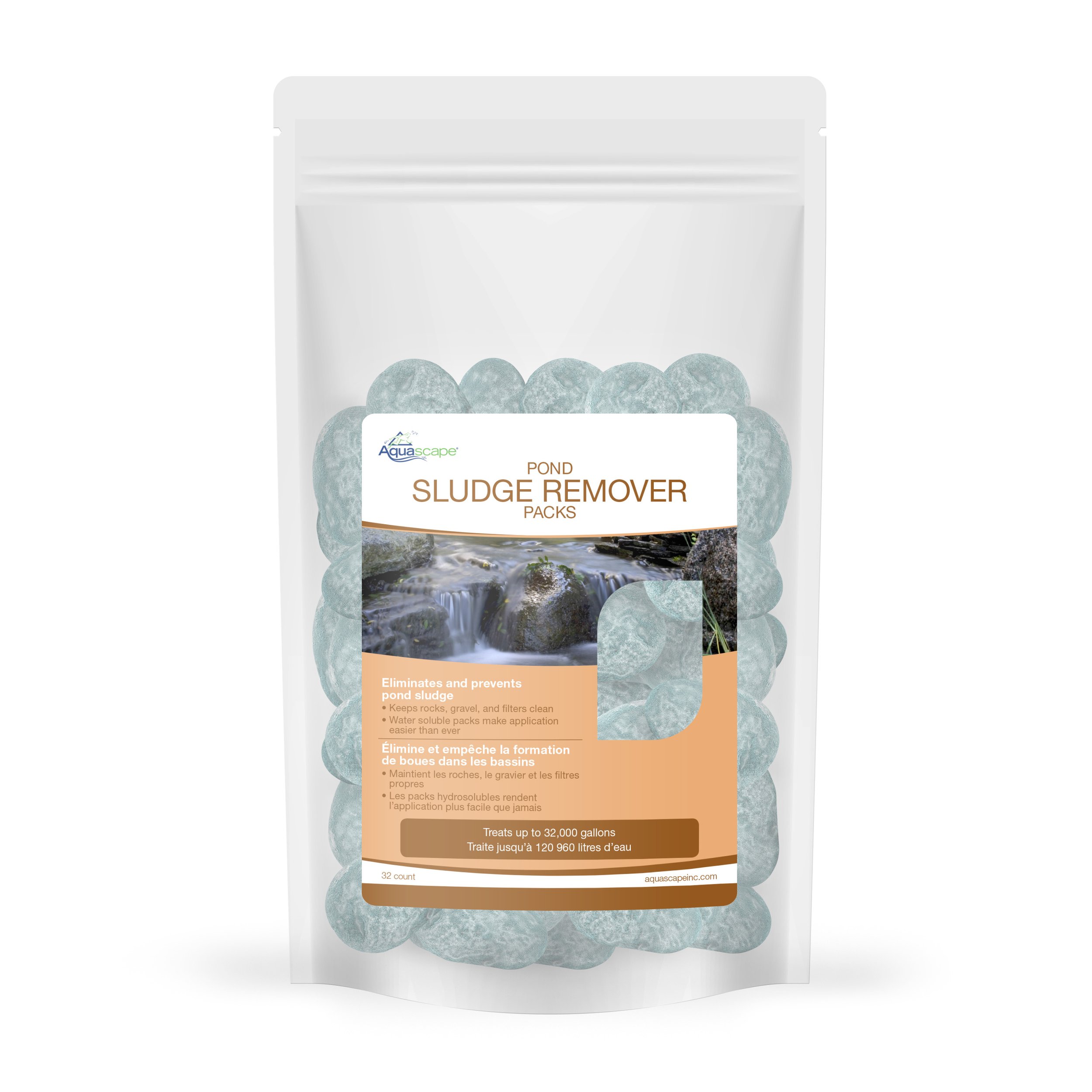
Pond Sludge Remover Packs - water-soluble packs that dose the sludge layer directly, designed for spot-treating specific problem areas (rocks, gravel, the base of the biological filter) rather than treating the whole pond volume.
Aquascape Clean for Ponds - a liquid, pump-dosed treatment using a concentrated blend of heterotrophic bacteria. Rather than spot-treating, it's dosed across the whole pond and works continuously to digest organic waste and sludge while also keeping filter mats and biological filter media clean - useful if filter maintenance has been creeping up alongside the sludge itself.
Think of Sludge Remover Packs as the targeted fix for a visible problem area, and Clean for Ponds as the ongoing maintenance dose that keeps sludge and filter build-up from getting to that point in the first place. For an established build-up, we recommend twice weekly for the first two weeks with either product, then dropping back to a weekly maintenance dose.
Alongside those two:
Keep up your general beneficial bacteria dosing to support the broader ecosystem, not just the sludge itself
Clear any obvious debris - leaves, dropped plant matter - before it has the chance to break down into more sludge
Check your filtration is running consistently, since bacteria concentrate in the biological filter media and rely on water movement through it
When It's Gone Past a Dosing Fix
If sludge has built up to a noticeable depth - thick enough to see through shallow water, or affecting how the pond looks and smells - both products above will still help, but won't clear an established backlog overnight. That's when a physical clean makes sense: draining down, removing built-up sludge directly, and giving the biological filter a proper service before restarting the treatment programme.
This is where a lot of owners either take it on themselves or bring in a professional clean, depending on pond size and how comfortable they are working around an established ecosystem without disturbing it more than necessary.
Preventing the Backlog Next Time
The ponds that never end up needing a full clean-out are the ones on a consistent routine through the shoulder seasons (autumn leaf-drop, spring start-up) when the waste load and bacteria activity are most out of step with each other. Keeping Clean for Ponds in the weekly rotation, with Pond Sludge Remover Packs on hand for spot-treating any problem areas that do appear, covers both the ongoing prevention and the targeted fix. An Aquascape Automatic Dosing System can also take Clean for Ponds in its SL concentrate form, taking the "did I do it this week" question out of the equation entirely.
The Short Version
A little sludge is fine - it means your pond's ecosystem is doing its job. A lot of sludge means the bacteria have fallen behind, and it's worth catching early with a spot-treatment or a Clean for Ponds routine before it becomes a full clean-out.
Shop Pond Sludge Remover Packs, Clean for Ponds and the rest of our water treatment range online, or get in touch if you're not sure which category your pond's in.
What to Consider When Planning a Pondless Waterfall
Planning a pondless waterfall? Here's what to think about before you build - from site selection and stone to the system underneath and what to expect long-term.
A pondless waterfall is one of the most rewarding things you can add to a Canterbury garden. The sound of flowing water, the natural stonework, the way it changes the feel of an outdoor space - clients consistently tell us it's the best decision they made for their property.
But getting one right takes more planning than most people expect. Not because it's complicated, but because the decisions you make upfront - about site, size, stone, and how the system is built - determine how good it looks and how easy it is to live with for the next 20 years.
Here's what we consider on every pondless waterfall project, and what you should be thinking about before you get started.
Where You Put It Matters More Than You Think
The most common mistake we see in pondless waterfall planning is putting the feature too far away. Most people's instinct is to position it at the back of the garden or in a corner where it seems like it would fit naturally - but the further away it is, the less you actually enjoy it.
The sound and movement of flowing water is what makes a pondless waterfall special, and you want to experience that from where you spend your time. That usually means closer to the house than you'd initially think - visible from a main living area, a kitchen window, or an outdoor entertaining space. A waterfall you can see and hear from the couch on a Sunday afternoon is going to give you far more value than one that looks great in the far corner of the section.
Beyond placement, the other key site considerations are:
Access for machinery - The reservoir basin needs to be excavated. We run a 1.7-tonne digger that fits through most standard side gates, but access isn't always possible. Without machine access we can still make it work - it may mean additional labour cost or influence the scale of the feature that's practical for the site.
Proximity to power - The recirculating pump needs a power source. Depending on where the feature sits relative to your home, a power supply may need to be run to the area by a licensed electrician - this is not included in our pricing and is worth factoring into your budget early.
Size: Bigger Isn't Always Better, But Going Too Small Is a Common Regret
The size of a pondless waterfall is driven by a few things: the scale of the garden, the visual impact you want, and budget.
What we tell clients is that the most common regret we hear from people who've had water features built elsewhere is that they went too small. A compact feature can look underwhelming in a mid-sized Canterbury garden, and it's much harder to go back and extend it than to build it right the first time.
The other factor is the reservoir. The underground basin that holds the recirculated water needs to be sized correctly for the volume of water in the system. An undersized reservoir means the waterfall can run dry at the top on a hot Canterbury day, which is both frustrating and hard on the pump.
We size every reservoir to suit the feature, accounting for water loss through evaporation and local conditions.
Stone Selection Sets the Tone
One of the most visible decisions in any pondless waterfall build is the stone. The boulders and rock you choose define whether the feature looks natural and permanent, or out of place.
For Canterbury builds, we currently work with Oxford boulders as our primary feature stone. They're local, they have a natural weathered, mossy character that suits the Canterbury landscape. River rock fill in around them, giving the waterfall that layered, natural streambed look.
What matters most is variety in size. Nature doesn't work in matching pairs - the best installations use a mix of boulder sizes, with larger anchor stones framing the falls and smaller material filling in between.
The System Underneath Is What Makes It Low-Maintenance
A pondless waterfall looks simple from the outside. What's happening underground is what separates a feature that runs beautifully for decades from one that causes ongoing headaches.
Every Southern Waterscapes pondless waterfall is built on Aquascape's proven ecosystem technology:
Firestone ELEVATE EPDM liner — 1.14mm thick, fish safe, and backed by a 20-year warranty when installed correctly with geotextile underlay. This is the liner used by professional water feature builders worldwide, and it's what we use on every build.
Aquascape AquaBlox reservoir system — the underground basin is filled with interlocking modular blocks rather than loose aggregate. This gives you significantly more water holding capacity in the same footprint, and makes the reservoir accessible for maintenance.
Aquascape pump and filtration — properly sized for the waterfall height and flow rate. An undersized pump produces a weak, unimpressive flow. An oversized one wastes electricity and can cause problems at the spillway. Sizing it correctly takes experience.
Auto-fill valve — automatically tops up water lost to evaporation and splash, so you're not manually filling the reservoir on hot Canterbury summer days.
LED lighting — integrated into the stonework to extend the feature into the evening. A pondless waterfall lit at night in a Canterbury garden is genuinely something special.
Aquascape auto-dosing system — delivers water treatment product on a set schedule, keeping the water clear and the system healthy with minimal effort from you.
What the Build Actually Involves
Understanding what goes into the construction helps set realistic expectations for timeline and site disruption.
Build time varies depending on the scale of the feature - a small pondless waterfall typically takes around two days on site, while a larger build can run anywhere from seven to ten days. The sequence is:
Excavate the reservoir basin and waterfall grade with the digger
Lay geotextile underlay and Firestone EPDM liner
Install the AquaBlox reservoir, pump vault, and pump
Build up the stone - boulders first, then rock and aggregate
Seal gaps between stones with Aquascape Professional Black Waterfall Foam
Install auto-fill valve, lighting, and auto-dosing system
Fill it up, get it running, and dial in the flow and lighting.
Final tidy and site clean-up
The site will have a digger on it for all of the build, which means some lawn disruption around the feature area. We work to minimise this, but it's worth being prepared for some mess before the finished result comes together.
Maintenance: What to Expect Long-Term
Pondless waterfalls are genuinely low-maintenance - that's one of the main reasons clients choose them over an ecosystem pond. But low-maintenance doesn't mean no maintenance.
What you'll typically do yourself:
Topping up water - If your feature includes an auto-fill valve, water top-up is taken care of automatically. Without one, you'll need to manually top up the reservoir during dry Canterbury summers.
Clear leaf debris from around the basin inlet - particularly in autumn
Check the pump once a season to make sure it's running cleanly
Refill the auto-dosing system with Aquascape water treatment product as needed — a single bottle can last anywhere from a few months up to nearly a year depending on the size of your feature.
What we recommend annually:
Once a year, usually in spring, we recommend a seasonal clean-out. In nature, snowmelt and spring rain flush rivers and streams of the debris that's built up over winter - we're mimicking that same process. The water is pumped into holding tanks to preserve the beneficial biology, the reservoir is cleared of accumulated debris, and the water goes straight back in. Your feature comes out of it refreshed and ready for the season ahead. Most clients get us in to handle it - it's something we offer as an add-on service. If that's something you'd like, just mention it when we're talking through your build.
Getting a Quote
To make things straightforward, we offer three standard pondless waterfall packages -small, medium, and large - designed for typical residential Canterbury properties. These cover the most common builds and give you a clear price upfront without needing a site visit first.
For properties with more complexity - steep or unusual terrain, difficult access, significant grade engineering, or larger-scale features - we'll assess the site and quote accordingly.
Either way, the best starting point is a conversation. Get in touch and we can work out which option suits your property, or arrange a site visit if needed. We're based in Rolleston and work across Selwyn, Christchurch, Waimakariri, and greater Canterbury.
Southern Waterscapes Ltd is New Zealand's only Certified Aquascape Contractor, based in Rolleston, Canterbury.
EPDM Dam Liner NZ - Is It Right for Your Farm Dam?
EPDM liner isn't just for garden ponds. Here's what NZ farmers and lifestyle block owners need to know before lining a dam.
Most people associate EPDM rubber liner with garden ponds and pondless waterfalls - and that's where it's most commonly used. But EPDM is also a well-established choice for lining farm dams, stock water races, and lifestyle block water storage - and the same properties that make it excellent for garden ponds make it worth considering for larger water containment projects too.
Here's what you need to know before deciding if EPDM is the right liner for your dam.
What Is EPDM Liner?
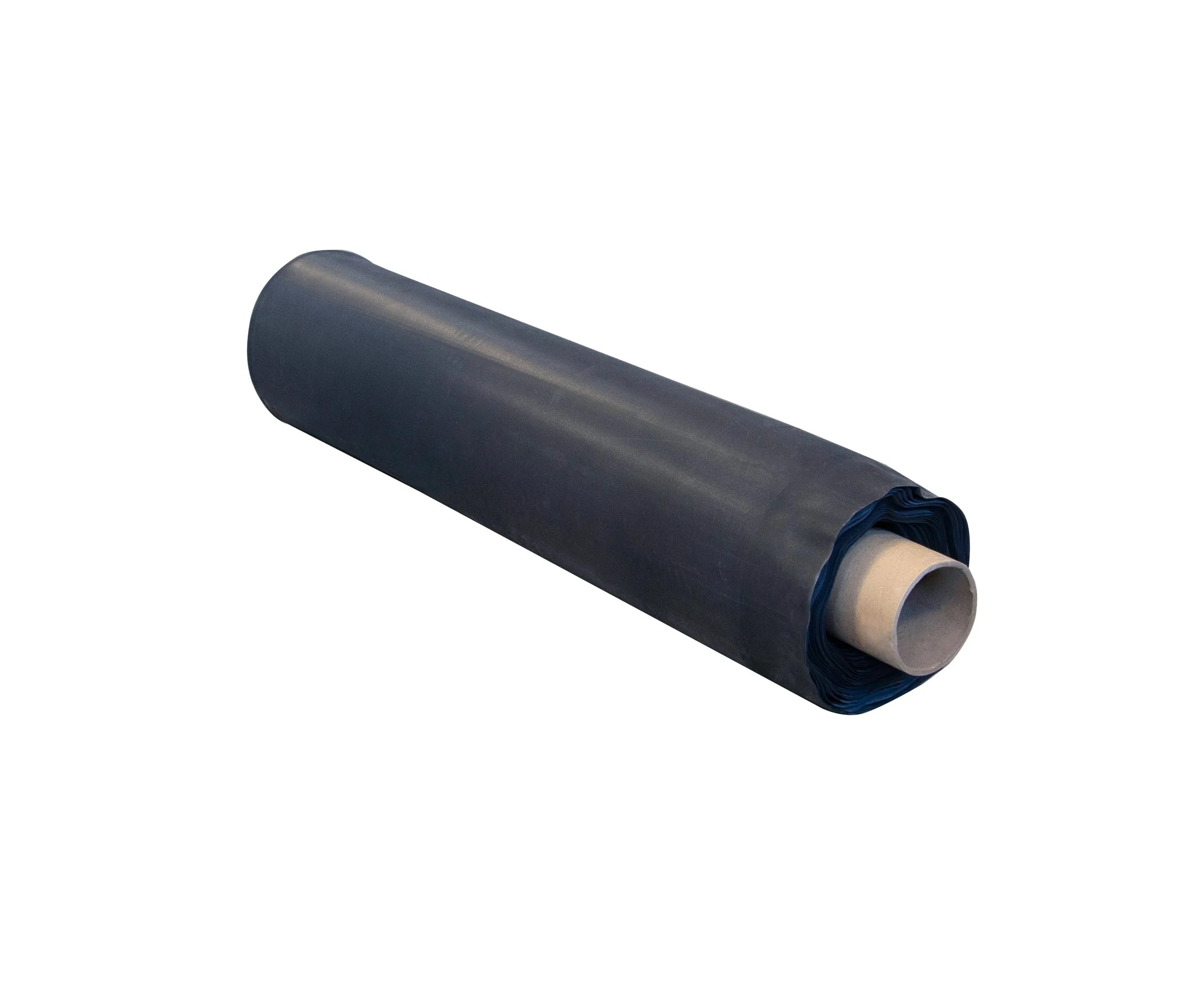
EPDM (Ethylene Propylene Diene Monomer) is a synthetic rubber membrane used to waterproof water containment structures of all sizes - from compact garden ponds to large farm dams. At 1.14mm (45 mil) thickness, it's flexible enough to conform to irregular shapes and contours, UV stable, and rated for long-term outdoor exposure.
The Firestone ELEVATE EPDM liner we stock is the same product used by professional pond builders worldwide - tested, warranted, and trusted for long-term performance in demanding outdoor conditions including New Zealand's high UV environment and temperature extremes.
Why Use EPDM for a Farm Dam?
Flexibility and conformability
Unlike rigid liners or concrete, EPDM rubber conforms to the shape of the dam rather than requiring a perfectly smooth, uniform surface. It handles ground movement, settlement, and irregular excavation profiles without cracking or failing at stress points.
Durability in NZ conditions
EPDM handles Canterbury's nor'west heat, South Island frosts, and New Zealand's high UV without degrading. It doesn't become brittle in cold temperatures the way PVC and some other synthetic liners do - which matters for farms and lifestyle blocks that experience real winter conditions.
Safe for stock and wildlife
Firestone ELEVATE EPDM is fish safe and wildlife safe - the same liner used in ecosystem ponds designed to support fish and aquatic life. For dams used by stock, wildlife, or as a water source for irrigation, this is an important consideration.
Long lifespan
Properly installed with geotextile underlay, EPDM carries a 20-year manufacturer's warranty. For a farm dam that's meant to hold water reliably for decades, that longevity matters.
No specialist equipment required
EPDM liner can be installed by a competent DIYer on smaller dams - it doesn't require specialised machinery or adhesives for basic installations. Larger or more complex projects benefit from professional installation, but for a straightforward lifestyle block dam the liner itself is accessible.
What Are the Limitations?
EPDM is an excellent liner, but it's worth being clear about where it works best and where other options might be more appropriate.
Size constraints
We supply EPDM liner in widths of 3.05m, 6.10m, 9.15m and 12.20m, sold per lineal metre. For smaller lifestyle block dams and stock water features these widths will often cover the dam in a single piece. For larger farm dams requiring wider coverage, multiple pieces need to be joined using EPDM tape and bonding adhesive - joins require care and the right materials to ensure a watertight seal.
For larger dam projects where even the 12.20m width isn't sufficient, we can also supply Firestone ELEVATE EPDM in a 15.25m wide roll on request - not listed on our standard store as it's beyond what most garden pond projects require, but well suited to larger lifestyle block and farm dam applications. Get in touch to discuss your requirements and we'll provide a quote.
Geotextile underlay is essential
EPDM liner must be installed over geotextile underlay to protect it from puncture by sharp stones, roots, and ground movement. Skipping the underlay significantly shortens liner life and voids the warranty. Factor underlay into your project from the start.
Steep or unstable banks
Very steep dam walls can cause liner to slip or stress at the edges if not properly anchored. A stable, well-prepared dam profile makes for a better installation.
Large scale commercial dams
For very large commercial or agricultural dams - irrigation reservoirs, large-scale water storage - EPDM is one option but there are other geomembrane products specifically engineered for large-scale containment. For lifestyle block and small farm dams, EPDM is well suited.
EPDM vs Other Dam Liner Options
EPDM vs PVC
PVC liner is cheaper upfront but becomes brittle in cold temperatures and degrades faster under UV. For New Zealand farms that experience real winters, EPDM's cold weather performance is a significant advantage. EPDM also has a longer lifespan - 20+ years vs 10-12 years for most PVC liners.
EPDM vs RPE (Reinforced Polyethylene)
RPE is lighter and thinner than EPDM and is commonly used for larger commercial and agricultural dams where ease of handling across a large area is a priority. It's less flexible than EPDM and doesn't stretch the same way, which can make it trickier to install around irregular shapes. For smaller lifestyle block dams, EPDM's flexibility is generally an advantage.
EPDM vs concrete
Concrete is permanent but expensive, time-consuming, and prone to cracking over time - particularly in areas with ground movement or frost. EPDM is significantly more cost-effective for most small to medium dam projects and installs much faster.
How Much Liner Do You Need?
The calculation is the same as for a garden pond - you need enough liner to cover the base, the sides, and an overlap at the top for anchoring.
Dam liner length = dam length + (2 x dam depth) + 0.6m overlap allowance each end
Dam liner width = dam width + (2 x dam depth) + 0.6m overlap allowance each side
For example, a dam 10m long x 6m wide x 1.5m deep would need:
Length: 10 + (2 x 1.5) + 1.2 = 14.2m
Width: 6 + (2 x 1.5) + 1.2 = 11.2m
In this case the 12.20m wide roll would cover the width, and you'd order 14.2 lineal metres.
For irregular shapes, use the maximum length and maximum width and add a generous overlap allowance - it's better to have excess liner than to run short mid-installation.
You'll also need geotextile underlay in the same dimensions.
Where to Buy EPDM Dam Liner in NZ
We supply Firestone ELEVATE EPDM liner cut to size from our online store, with nationwide delivery. Available in 3.05m, 6.10m, 9.15m and 12.20m widths as standard, sold per lineal metre. A 15.25m wide roll is also available on request for larger dam projects - get in touch for a quote.
To get a price, use the liner calculator on our product page - enter your dam dimensions and it'll calculate required liner size and give you an estimated price including GST.
Also Interested in a Garden Pond or Water Feature?
EPDM liner is the same product used in every Southern Waterscapes ecosystem pond and pondless waterfall build. If you're on a lifestyle block or rural property and thinking about adding a water feature as well as lining a dam, get in touch - we build custom water features across Canterbury and the wider South Island.
Southern Waterscapes Ltd - New Zealand's only Certified Aquascape Contractor, based in Rolleston. Firestone ELEVATE EPDM liner available nationwide from our online store.
What Water Treatment Does My Pond Actually Need?
The water treatment aisle can be overwhelming. Here's a plain-English breakdown of what each Aquascape treatment does and which one is right for your pond or pondless waterfall.
The water treatment your pond needs depends on your feature type and what issue you're addressing. For ecosystem ponds, Maintain for Ponds is the baseline ongoing treatment - switch to Clean for Ponds for sludge and organic buildup, or Clear for Ponds when water clarity is the issue. For pondless waterfalls, use Prevent for Fountains & Waterfalls (without fish or plants) or Clean for Fountains & Waterfalls (with fish or plants). All treatments are available with an auto-dosing system or as manual pump bottles.
If you've been browsing pond water treatments and found yourself more confused than when you started, you're not alone. There are a lot of products out there, and it's not always clear what each one does, whether you actually need it, or how they work together.
This guide cuts through it. Here's what each Aquascape water treatment does, who it's for, and how to choose the right one for your feature.
First - Why Water Treatment Matters
A healthy pond or water feature relies on a living colony of beneficial bacteria to break down fish waste, organic debris, and excess nutrients. Without enough bacteria working consistently, you get green water, algae, sludge buildup, and poor water quality.
Water treatment isn't about adding harsh chemicals - it's about supporting the natural biology that keeps your feature clear and healthy. The Aquascape range is built around this principle. Every product is safe for fish, plants, and wildlife (with one noted exception covered below), and designed to work with your pond's ecosystem rather than against it.
The Two Systems - SL Auto-Dosing vs Standard Pump Bottles
Before getting into the individual products, it's worth understanding the two formats the Aquascape treatment range comes in.
SL Auto-Dosing (946ml)
The SL range is specifically formulated for use with the Aquascape Automatic Dosing System SL. The dosing system delivers a precise micro-dose of treatment into your feature twice daily, automatically. Small, consistent doses applied daily are significantly more effective than larger doses added manually every week or two. If your Southern Waterscapes build includes an auto-dosing system, the SL range is what you use.
Standard Pump Bottles (473ml)
For pond owners without an auto-dosing system, the standard 473ml pump bottle range allows you to dose manually. One pump per 378L of water, added regularly. Available for the core pond treatment range.
Ecosystem Pond Treatments
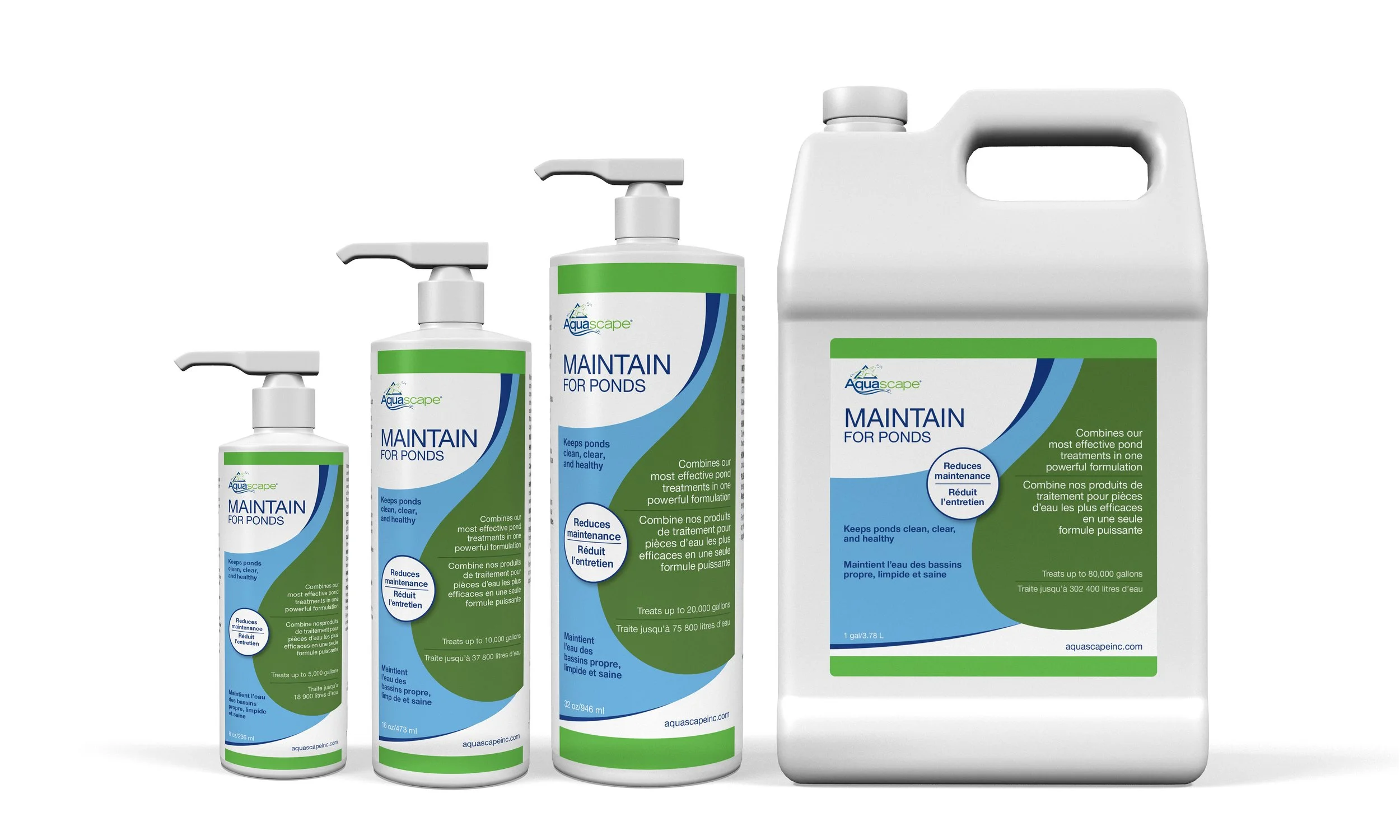
Maintain for Ponds
Your baseline product. Maintain for Ponds is the treatment you run day-to-day to keep your pond performing well - it's not a fix for a specific problem, it's ongoing support for your pond's biological balance.
It contains a powerful multi-formulation blend - beneficial bacteria, phosphate binder, flocculant, and pond detoxifier - so you're not having to add multiple separate products. It keeps water clear, supports the bacteria colony, and binds excess phosphates that would otherwise fuel algae growth.
Available as: Maintain for Ponds SL 946ml (auto-dosing) | Maintain for Ponds 473ml (pump bottle)
Fish safe: Yes | Plant safe: Yes
Clean for Ponds
When your pond needs more active attention - sludge building up on the bottom, water looking murky, organic waste accumulating - Clean for Ponds is the treatment to switch to. It uses concentrated beneficial bacteria and enzymes to break down fish waste, decaying plant matter, and organic debris naturally.
Think of it as a deeper clean than Maintain. Once the pond is back in good shape, switch back to Maintain for ongoing maintenance.
Available as: Clean for Ponds SL 946ml (auto-dosing) | Clean for Ponds 473ml (pump bottle)
Fish safe: Yes | Plant safe: Yes
Clear for Ponds
If your pond water is cloudy, green, or struggling with algae - Clear for Ponds is the targeted treatment. It uses a fast-acting flocculant to bind fine suspended particles and algae, allowing your filter to remove them and restoring water clarity.
It's not an ongoing treatment - it's what you reach for when clarity is the specific issue. Once the water clears, return to Maintain for regular maintenance.
Available as: Clear for Ponds SL 946ml (auto-dosing) | Clear for Ponds 473ml (pump bottle)
Fish safe: Yes | Plant safe: Yes
Rapid Clear Flocculant
A standalone fast-acting flocculant for when you need results quickly. Where Clear for Ponds works gradually through the dosing system, Rapid Clear is a one-off treatment that clears cloudy or green pond water within hours by binding suspended particles so your filter can remove them rapidly.
Good to have on hand for a quick fix when you need it.
Available as: Rapid Clear Flocculant 473ml (pump bottle)
Fish safe: Yes | Plant safe: Yes | Wildlife safe: Yes
Pond Sludge Remover
Over time, organic material settles on the bottom of your pond and forms sludge - fish waste, leaf debris, uneaten food. Left unchecked it affects water quality and oxygen levels. Pond Sludge Remover uses concentrated beneficial bacteria and enzymes in individual water-soluble pouches to break it down naturally.
Drop a pouch into your pond and it fizzes to work, dispersing bacteria throughout the water column. No measuring, no mess. Best used as part of your seasonal maintenance routine rather than as an emergency fix.
Available as: Pond Sludge Remover Packs - 18 Pack
Fish safe: Yes | Plant safe: Yes | Wildlife safe: Yes
Pond Starter Bacteria
If you've just built a new pond or completed an annual clean-out, Pond Starter Bacteria is what gets the biological cycle going quickly. A new pond doesn't have an established bacteria colony yet - Pond Starter fast-tracks that process to prevent ammonia spikes, cloudy water, and early algae growth.
One pump treats 378L. Use it at startup, then transition to Maintain for Ponds for ongoing treatment.
Available as: Pond Starter Bacteria 473ml (pump bottle)
Fish safe: Yes | Plant safe: Yes | Wildlife safe: Yes
Beneficial Bacteria
A concentrated blend of naturally occurring bacteria strains for ongoing pond maintenance. Similar in purpose to Maintain for Ponds but in a more focused bacteria-only formula - no phosphate binder or flocculant, just bacteria and enzymes for breaking down waste and excess nutrients.
Available as: Beneficial Bacteria 473ml (pump bottle) | Beneficial Bacteria Concentrate 500g (dry formula, high potency, suits larger ponds)
Fish safe: Yes | Plant safe: Yes | Wildlife safe: Yes
Bacteria Bubble Tabs
Pre-measured effervescent beneficial bacteria tablets - drop one in and it fizzes to work, dispersing bacteria evenly throughout your pond. One tab treats 379L. A convenient format if you prefer not to measure liquid treatments.
Available as: Bacteria Bubble Tabs - 36 Pack
Fish safe: Yes | Plant safe: Yes | Wildlife safe: Yes
QuickFix Pond Gummy
A fast-acting all-in-one pond treatment in a dissolvable gummy format - no measuring, no mess. Packed with beneficial bacteria, enzymes and water conditioners. Each gummy treats 11,240L. Good to have on hand for a quick treatment when your pond needs a boost.
Available as: QuickFix Pond Gummy (single)
Fish safe: Yes | Plant safe: Yes | Wildlife safe: Yes
Pondless Waterfall Treatments
Pondless waterfalls use a different set of treatments since there are no fish or pond plants involved. All Southern Waterscapes pondless waterfall builds include an Aquascape auto-dosing system as standard, so the SL range applies here.
Clean for Fountains & Waterfalls SL
For pondless features that have fish or aquatic plants - cleans and clarifies using a fast-acting flocculant and phosphate binder. Fish safe and plant safe.
Available as: Clean for Fountains & Waterfalls SL 946ml (auto-dosing)
Prevent for Fountains & Waterfalls SL
For pondless features without fish or plants - prevents white scale buildup, foam, staining, and cloudy water. Run this consistently through the auto-dosing system for clear, low-maintenance water.
Note: Prevent is not safe for fish or plants - for features with aquatic planting that the water contacts, use Clean for Fountains & Waterfalls SL instead.
Available as: Prevent for Fountains & Waterfalls SL 946ml (auto-dosing)
Wildlife safe: Yes (birds and animals that drink from the feature)
The Simple Version - Which Product Do You Need?
New pond just built or cleaned out: Pond Starter Bacteria, then transition to Maintain for Ponds
Ongoing pond maintenance: Maintain for Ponds (auto-dosing SL or pump bottle)
Pond needs a deeper clean: Switch to Clean for Ponds, then back to Maintain
Cloudy or green water: Clear for Ponds or Rapid Clear Flocculant
Sludge building up: Pond Sludge Remover Packs
Quick one-off treatment: QuickFix Pond Gummy or Bacteria Bubble Tabs
Pondless waterfall without fish or plants: Prevent for Fountains & Waterfalls SL
Pondless waterfall with fish or plants: Clean for Fountains & Waterfalls SL
The Auto-Dosing System - Worth It?
If you're manually dosing your pond treatments and finding it easy to forget, the Aquascape Automatic Dosing System SL is worth considering. It delivers the right amount of treatment twice daily, automatically - so your bacteria colony is supported consistently without you having to think about it.
The SL treatment range is formulated specifically for the dosing system and isn't available anywhere else in New Zealand. All Southern Waterscapes builds include the dosing system as standard, but it can also be retrofitted to existing ponds and water features.
Shop the Aquascape water treatment range
Southern Waterscapes Ltd - New Zealand's only Certified Aquascape Contractor, based in Rolleston. Aquascape water treatment products available nationwide from our online store.
How Much Pond Liner Do I Need?
Getting your liner size wrong is an expensive mistake. Here's how to calculate exactly how much EPDM pond liner you need - with a free calculator to make it simple.
One of the most common questions we get from people planning a DIY pond or water feature is how much liner to order. Get it right and you have a clean, professional install with no joins. Get it wrong and you're either buying more liner or - worse - you run short mid-build.
The good news is the calculation is straightforward once you know the formula. Here's how it works.
If you're still deciding between liner types, our EPDM vs PVC guide covers everything you need to know before you buy.
The Basic Formula
Pond liner needs to cover not just the base of your pond, but also the sides and a folded edge at the top for anchoring. The standard formula for calculating liner size is:
Liner Length = Pond Length + (2 x Pond Depth) + (2 x Overlap)
Liner Width = Pond Width + (2 x Pond Depth) + (2 x Overlap)
Where overlap is the amount of liner that folds over the edge of the pond - typically 300mm (0.3m) on each side.
A Worked Example
Let's say you're building a pond that is:
3m long
2m wide
0.6m deep
Using the formula:
Liner Length = 3 + (2 x 0.6) + (2 x 0.3) = 3 + 1.2 + 0.6 = 4.8m
Liner Width = 2 + (2 x 0.6) + (2 x 0.3) = 2 + 1.2 + 0.6 = 3.8m
So for this pond you'd need a piece of liner at least 4.8m long by 3.8m wide. In this case the 6.10m wide roll would cover the width with room to spare, and you'd order 4.8 lineal metres.
What About Irregular Shapes?
If your pond has curves, shelves, or an irregular shape, the formula still works - you just use the maximum length and maximum width of the pond. The liner is flexible enough to fold and tuck around curves without needing to be cut to an exact shape.
For very complex shapes or large features it's worth adding an extra 10-15% to your calculation as a buffer. You can always trim excess - you can't add more once the liner is cut.
Don't Forget the Overlap
The overlap is the bit people most commonly underestimate. 300mm on each side is the minimum - enough to fold over the pond edge and tuck under the coping stones or surround. For larger or deeper ponds, 450mm gives you more flexibility during the build.
If you're installing the liner yourself for the first time, err on the side of a larger overlap. It's much easier to trim back excess than to discover you're short once the pond is built and filled.
Available Widths
Firestone ELEVATE EPDM pond liner from Southern Waterscapes is available in four widths:
3.05m wide - $125.00/lm
6.10m wide - $249.00/lm
9.15m wide - $375.00/lm
12.20m wide - $499.00/lm
For most residential garden ponds, the 3.05m or 6.10m width will cover the pond width in one piece with no joins required. Larger features may need the 9.15m or 12.20m roll - or in some cases, two pieces joined with EPDM tape.
Do You Also Need Geotextile Underlay?
Yes - and this is important. Firestone ELEVATE EPDM liner carries a 20-year manufacturer's warranty, but only when installed correctly with geotextile underlay underneath and over the liner. The underlay protects the liner from punctures caused by stones and soil movement, and is required for the warranty to be valid.
You'll need underlay in the same dimensions as your liner. Our Geotextile Pond Underlay is 3.9m wide and sold per lineal metre - order the same quantity as your liner and cut to suit.
Use Our Free Liner Calculator
Rather than doing the maths by hand, use the free EPDM Liner Calculator on our product page. Enter your pond length, width, depth, and overlap and it will calculate your required liner dimensions, recommend the right roll width, and give you an estimated price including GST.
Calculate your liner size here
Once you know what you need, use the enquiry form on the same page to place your order. We'll confirm freight cost based on your location and cut your liner to size.
A Note on Pondless Waterfalls
The same formula applies to pondless waterfalls, with one difference - you're lining a reservoir basin and a waterfall run rather than a traditional pond shape. The waterfall run is typically measured as a long, narrow strip, and the basin as a separate rectangular shape. If you're not sure how to calculate liner for a pondless waterfall, get in touch and we can help work it out before you order.
Order EPDM Pond Liner NZ-Wide
Firestone ELEVATE EPDM liner is available from the Southern Waterscapes online store, cut to your required size and shipped from our North and South Island warehouses. Freight is calculated per order based on liner size and delivery location.
Southern Waterscapes Ltd - New Zealand's only Certified Aquascape Contractor, based in Rolleston. Aquascape products and Firestone EPDM liner available nationwide from our online store.
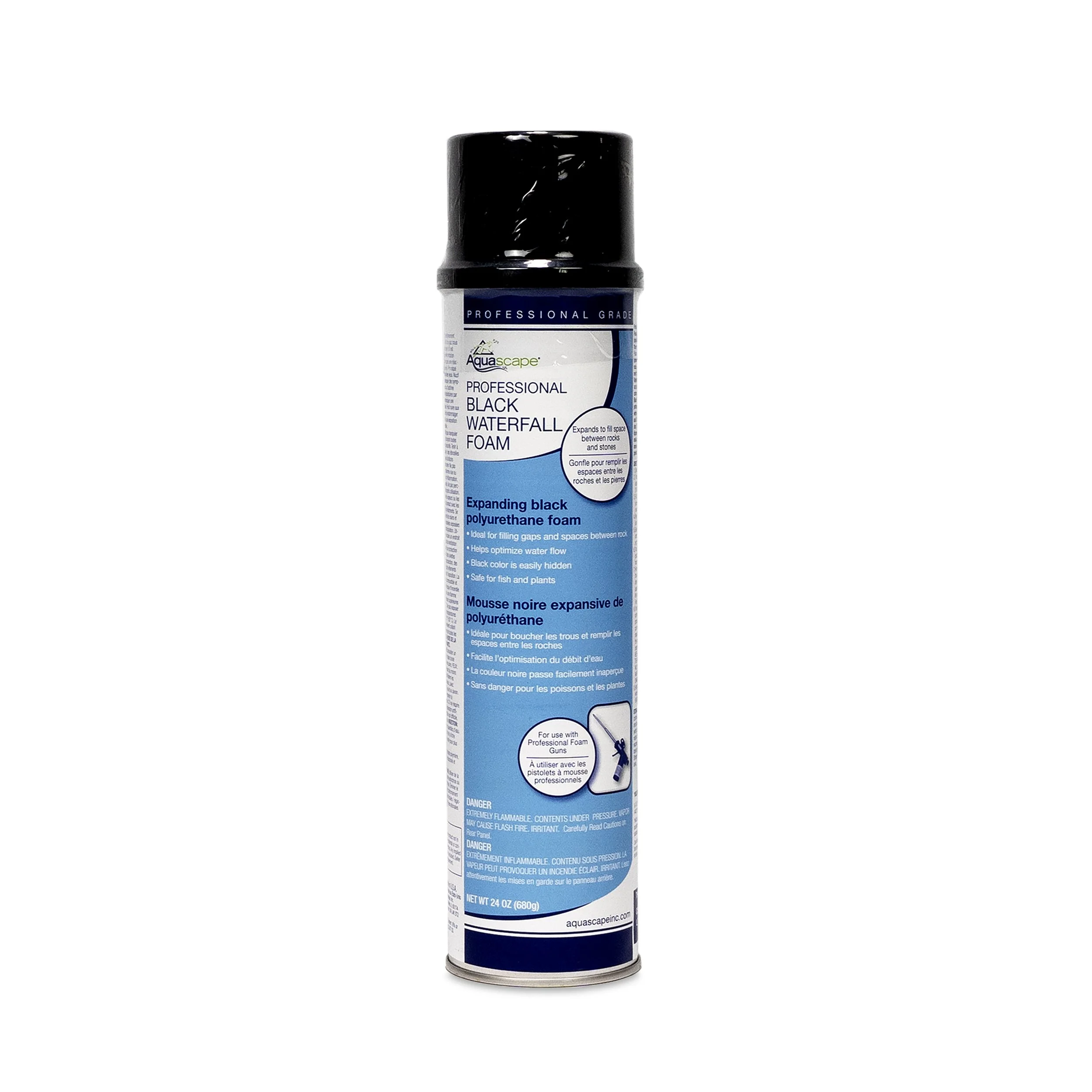
Waterfall Foam NZ - DIY vs Professional Grade
Waterfall foam is one of those products that looks simple until you buy the wrong one. Here's how to choose between DIY and professional grade - and why it matters.
If you've been researching pond and waterfall construction, you've probably come across waterfall foam - the black expanding foam used to seal gaps between rocks and direct water flow. It looks straightforward enough, but there are two very different grades of product on the market, and choosing the wrong one can cause real headaches on your build.
Here's what separates DIY foam from professional grade, and how to work out which one you need.
What Is Waterfall Foam?
Waterfall foam is a polyurethane expanding foam specifically formulated for use in ponds, waterfalls, and water features. It fills gaps between rocks and boulders, seals the liner edges, and directs water where you want it to go rather than letting it sneak underneath or around the stonework.
It's black - which matters. Standard household expanding foam is beige or yellow and would look completely wrong in a naturalistic pond setting. Waterfall foam cures black so it disappears between dark rocks and becomes effectively invisible once the feature is running.
Crucially, it needs to be fish safe. Standard construction foam is not formulated for immersion in water containing fish or aquatic life. Waterfall foam is specifically tested and certified for this use.
DIY Grade vs Professional Grade - What's the Difference?
There are two main formats available, and they're designed for different situations.
DIY Grade - Aquascape Pond & Waterfall Foam Sealant 12oz
The 12oz DIY foam comes with a built-in applicator straw - no foam gun required. You shake the can, attach the straw, and apply directly. It's compact, straightforward, and designed for smaller jobs and repairs.
Best suited for:
Small ponds and water features
DIY builds and weekend projects
Repairs and touch-ups on existing features
Situations where you only need a small amount of foam
Key specs:
12oz / 340g can
Built-in applicator straw - no gun needed
Low expansion, high density black polyurethane
Fish safe, immersible within 15 minutes
Won't crack in freezing temperatures
The built-in straw is convenient but has a limitation - once you stop mid-can, the foam in the straw cures and the can is effectively done. It's a single-use format, which is fine if you're using the whole can in one session but wasteful if you're working across multiple days.
Professional Grade - Aquascape Professional Black Waterfall Foam 24oz
The 24oz Professional foam is a different product at a different scale. It uses a foam gun applicator rather than a built-in straw, which gives you precise control over where the foam goes and - crucially - allows you to seal the gun between uses and come back to the same can later.
One 24oz Professional can is the equivalent of five standard DIY cans - making it significantly more economical on any build involving substantial rockwork.
Best suited for:
Larger ponds and waterfall builds
Professional installations
Multi-day builds where the foam needs to last across sessions
Anyone wanting precise, controlled application
Key specs:
24oz / 680g can - equivalent to 5 standard DIY cans
Requires Aquascape Contractor Foam Gun Applicator (sold separately)
Low expansion, high density black polyurethane
Fish safe, immersible within 15 minutes
Won't crack in freezing temperatures
Reusable across multiple cans when used with Professional Foam Gun Cleaner
The gun applicator creates an airtight seal on the can between uses, keeping the foam fresh. This makes it significantly more economical on larger projects - you're not wasting half a can because the straw cured overnight.
Which One Should You Buy?
Buy the 12oz DIY foam if:
You're building or repairing a small water feature
You only need foam for a single session
You don't want to invest in a foam gun
It's a one-off project
Buy the 24oz Professional foam if:
You're building a larger pond or waterfall
You're working across multiple days
You want precise application and less waste
You're a landscaper or contractor building features regularly
If you're on the fence, consider the volume of stonework involved. A small pondless waterfall with modest rockwork might only need one 12oz can. A larger build with significant boulder placement and a long stream run will go through multiple cans - at that scale the gun applicator pays for itself quickly in foam saved between sessions.
What About the Foam Gun and Cleaner?
If you're going with the Professional 24oz foam, you'll need the Aquascape Contractor Foam Gun Applicator. This is a dedicated gun designed specifically for the 24oz Professional Foam - it creates an airtight seal on the can between uses and gives you precise control over bead size and placement.
When switching between cans, you'll need the Aquascape Professional Foam Gun Cleaner to flush the gun mechanism and prevent cured foam from blocking it. This is a consumable - keep one on hand if you're going through multiple cans.
Both are available from our online store.
Where to Buy Waterfall Foam in NZ
Both the DIY and Professional grade waterfall foam are available through the Southern Waterscapes online store with nationwide delivery.
Both foam products ship as dangerous goods (Class 2.1 flammable aerosol) - a flat $18 shipping rate applies regardless of order size.
Southern Waterscapes Ltd - New Zealand's only Certified Aquascape Contractor, based in Rolleston. Aquascape products available nationwide from our online store.
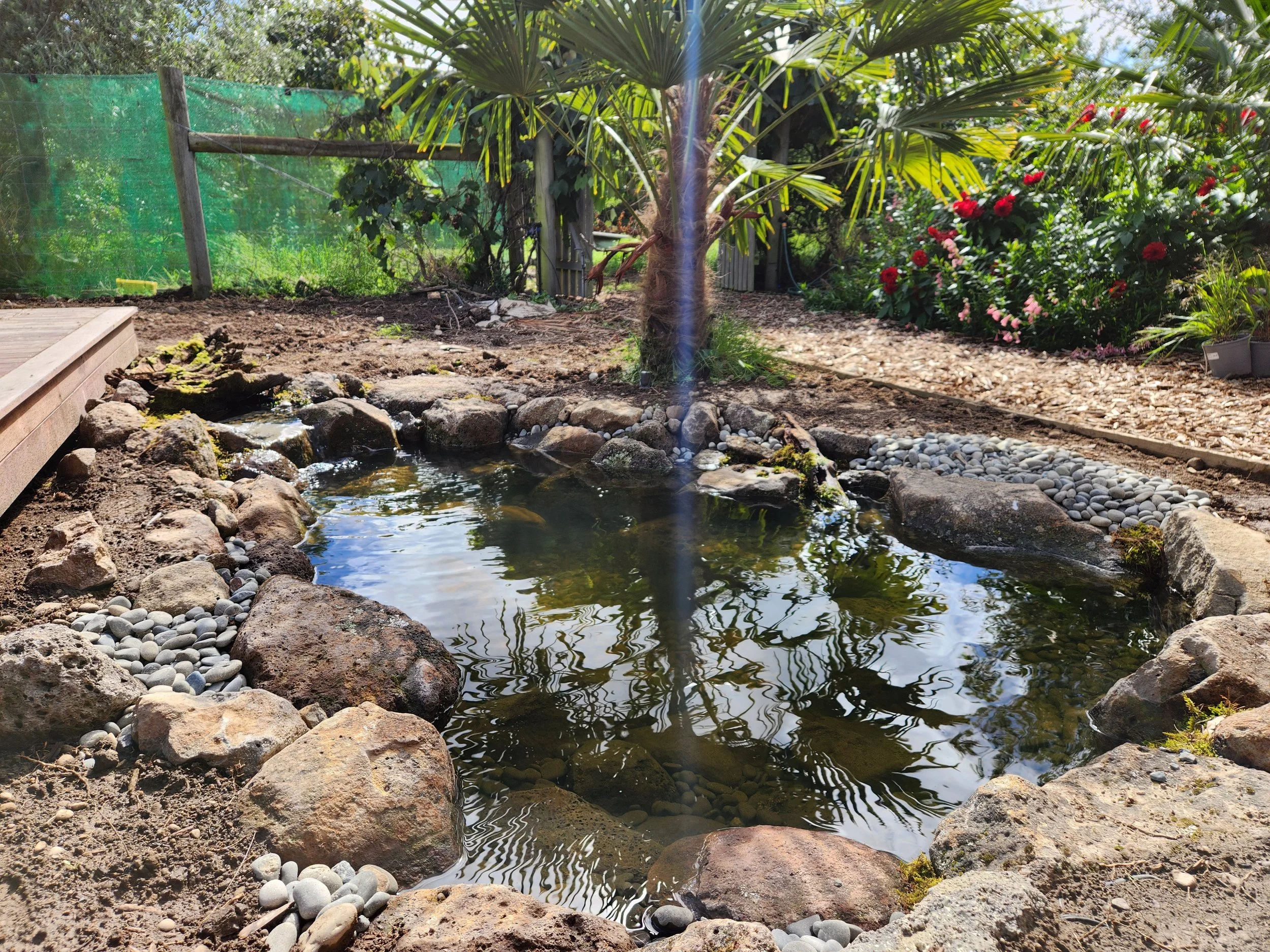
Are Garden Ponds Safe for Children?
An honest guide to garden pond safety for families with young children — and why pondless waterfalls are the most popular choice for Canterbury family homes.
It's one of the most common questions we get from families considering a water feature: is a garden pond safe with young children around?
It's a fair and important question — and we believe you deserve an honest answer rather than reassurance designed to close a sale.
The Honest Answer
Any open body of water carries risk around young children. Garden ponds are no exception. Even shallow water poses a drowning risk for toddlers and young children, and this is something every family should take seriously before installing a pond.
That said, risk can be managed — and for many families, a well-designed pond is perfectly compatible with family life. It comes down to your specific situation, your children's ages, and how your garden is set up.
What Makes a Pond Safer for Families
If you have older children or teenagers and still want a pond, there are design and management approaches that reduce risk significantly.
Secure perimeter fencing — fencing around the pond area is the most effective safety measure available and the approach we most commonly recommend to families. It creates a clear physical barrier between children and the water and provides genuine peace of mind. It's worth noting that unlike swimming pools, garden ponds are not required by law to be fenced in New Zealand — but for families with young children, we think it's the best option if a pond is what you want. We can incorporate fencing into the overall design so it feels intentional rather than an afterthought.
Shallow marginal shelves — a well-designed ecosystem pond includes shallow planting shelves around the edges. While these don't eliminate risk, they mean the water deepens gradually rather than dropping steeply at the edge.
Dense marginal planting — thick planting around pond edges creates a natural barrier that makes it harder to approach the water's edge unnoticed, and adds to the natural feel of the feature.
Supervision and education — older children can be taught pond safety just as they learn pool safety. Understanding the pond as a living ecosystem — with fish, plants and wildlife — also builds a natural respect for it.
None of these measures make a pond completely risk-free. If you have toddlers or very young children and your garden doesn't allow for secure fencing, a pond may not be the right choice right now — and we'll tell you that honestly.
The Safer Alternative — Pondless Waterfalls
For families with young children, a pondless waterfall is the water feature we most commonly recommend — and for good reason.
A pondless waterfall delivers everything people love about water in a garden: the sound of flowing water, the movement, the natural stone, the wildlife it attracts. But there is no open body of water. Water flows over stone and disappears into a hidden underground reservoir, where it's recirculated by a pump. At no point is there standing water deep enough to pose a drowning risk.
This makes pondless waterfalls genuinely family-safe in a way that ponds simply cannot match — and it's why they're our most popular feature for residential Canterbury gardens with young families.
Many of our clients choose a pondless waterfall when their children are young, with a plan to add an ecosystem pond later once the children are older. It's a practical approach that lets you enjoy water in your garden now without compromise.
What About Wildlife?
One of the most common follow-up questions is whether a pondless waterfall still attracts wildlife. The answer is yes — birds, butterflies and insects are drawn to the sound and movement of water regardless of whether there's an open pond. You won't get fish, and aquatic planting is more limited, but a pondless waterfall absolutely supports a garden ecosystem.
Our Recommendation for Canterbury Families
If you have children under about ten years old and cannot install secure fencing around a pond, a pondless waterfall is our recommendation. It gives you the beauty and atmosphere of water in your garden without the safety concerns — and it's genuinely low maintenance too.
If your children are older, or you have the ability to fence off a pond area securely, an ecosystem pond is a wonderful long-term addition to any Canterbury garden. We'd just encourage you to think carefully about the fencing question before committing.
Either way, we're happy to talk through what works best for your specific situation.
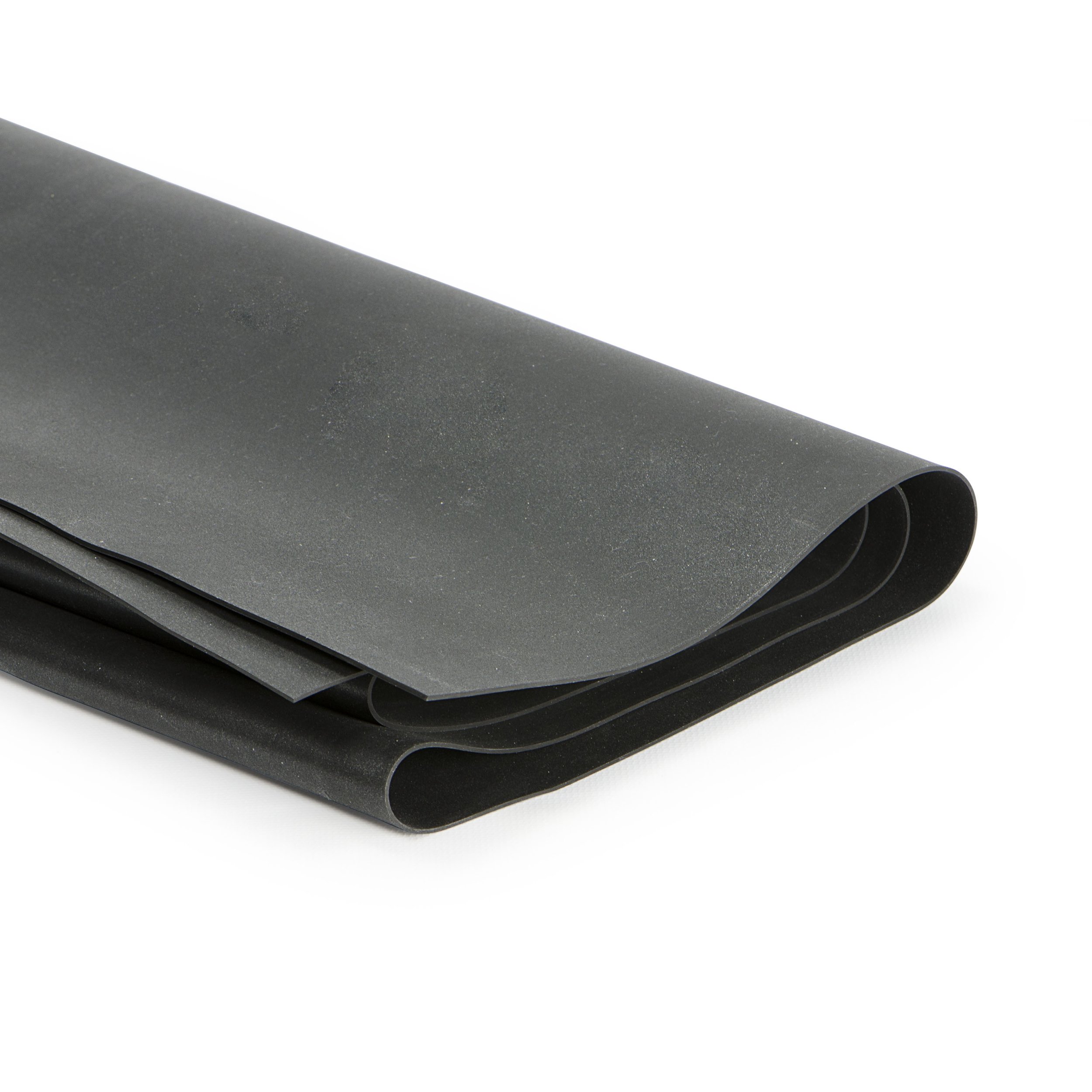
EPDM vs PVC Pond Liner NZ - Which Should You Use?
Not all pond liners are equal. Here's what separates EPDM from PVC - and why the choice matters more than most people realise.
If you're planning a garden pond or pondless waterfall and starting to look at liner options, you'll quickly come across two main choices: EPDM rubber liner and PVC liner. They look similar, they're both flexible, and PVC is usually cheaper. So what's the difference, and does it actually matter?
The short answer: yes, it matters a lot. Here's why.
What Is EPDM Pond Liner?
EPDM stands for Ethylene Propylene Diene Monomer - a synthetic rubber that's been used in professional pond construction since the 1980s. The standard thickness for residential pond and waterfall builds is 45 mil (1.14mm), which is what we use on every Southern Waterscapes installation.
EPDM is rubber in the truest sense - flexible, stretchy, and able to conform to almost any shape. It moulds around corners, shelves, and irregular forms without stress points or bunching. It's fish safe, plant safe, UV stable, and performs reliably in both freezing winters and hot summers without cracking, shrinking, or becoming brittle.
The Firestone ELEVATE EPDM liner we stock comes with a 20-year manufacturer's warranty when installed with geotextile underlay - which reflects the confidence the industry has in this product's lifespan.
What Is PVC Pond Liner?
PVC (Polyvinyl Chloride) is a plastic-based liner that's been used in ponds for decades. It's lighter than EPDM, easier to handle on large flat sites, and cheaper to buy upfront - which is why it's still sold widely.
The tradeoff is longevity and performance over time. PVC becomes brittle in cold temperatures, which is a real problem in New Zealand where frosts are common in many regions. It's also less UV stable than EPDM, meaning direct sun exposure degrades it faster. Most PVC liners carry a 10-year warranty at best, and real-world performance can fall short of even that.
There's also a fish safety consideration worth knowing about. Some PVC liners can contain trace amounts of plasticisers and other compounds that are potentially harmful to pond fish. If you're planning a pond with goldfish, this is something to take seriously - not all PVC liners are created equal on this front.
How Do They Compare?
What About RPE Liner?
You may also come across RPE (Reinforced Polyethylene) liner, which is worth a brief mention. RPE is lighter and thinner than EPDM, with good puncture resistance - it's used mainly on larger-scale commercial ponds and farm dams where weight and ease of handling across big areas matters most.
For residential garden ponds and pondless waterfalls - which involve curves, shelves, rock placement, and irregular shapes - EPDM's flexibility gives it a clear advantage. RPE doesn't stretch the same way, which makes it harder to work with around the tight, complex forms typical of a custom garden build.
Why Professional Pond Builders Use EPDM
For fish ponds and premium backyard ponds, 45-mil EPDM rubber is the professional choice. It's not just about flexibility - it's about how the liner performs over the life of the pond when rocks are placed on it, when ground shifts slightly over seasons, and when the weather does its worst.
Aquascape Inc, one of the world's largest water feature manufacturers, specifies Firestone ELEVATE EPDM as standard across their entire ecosystem pond and pondless waterfall system - find out more at aquascapeinc.com.
Ponds with large rocks positioned on or around the liner should never use PVC. Rock placement puts stress on the liner, and EPDM's rubber properties allow it to absorb that stress without tearing. PVC, being a rigid plastic at heart, doesn't have the same give.
Every Southern Waterscapes build uses Firestone ELEVATE EPDM liner with geotextile underlay as standard. It's what the Aquascape ecosystem system is designed around, and it's what we'd use on our own ponds. When you're building something that's meant to be in the ground for 20+ years, the liner isn't where you cut corners.
Is EPDM Pond Liner Available to Buy in New Zealand?
Yes - we stock Firestone ELEVATE EPDM pond liner cut to size through our online store, available in 3.05m, 6.10m, 9.15m, and 12.20m widths, sold per lineal metre with nationwide delivery from our North and South Island warehouses.
Whether you're a DIYer building your own pond or a landscaper looking for a reliable liner supplier, we can cut to your required length and ship direct. Freight is calculated per order based on liner size and delivery location.
Before you order, use our pond liner sizing guide to work out exactly how much you need.
Southern Waterscapes Ltd - New Zealand's only Certified Aquascape Contractor, based in Rolleston.
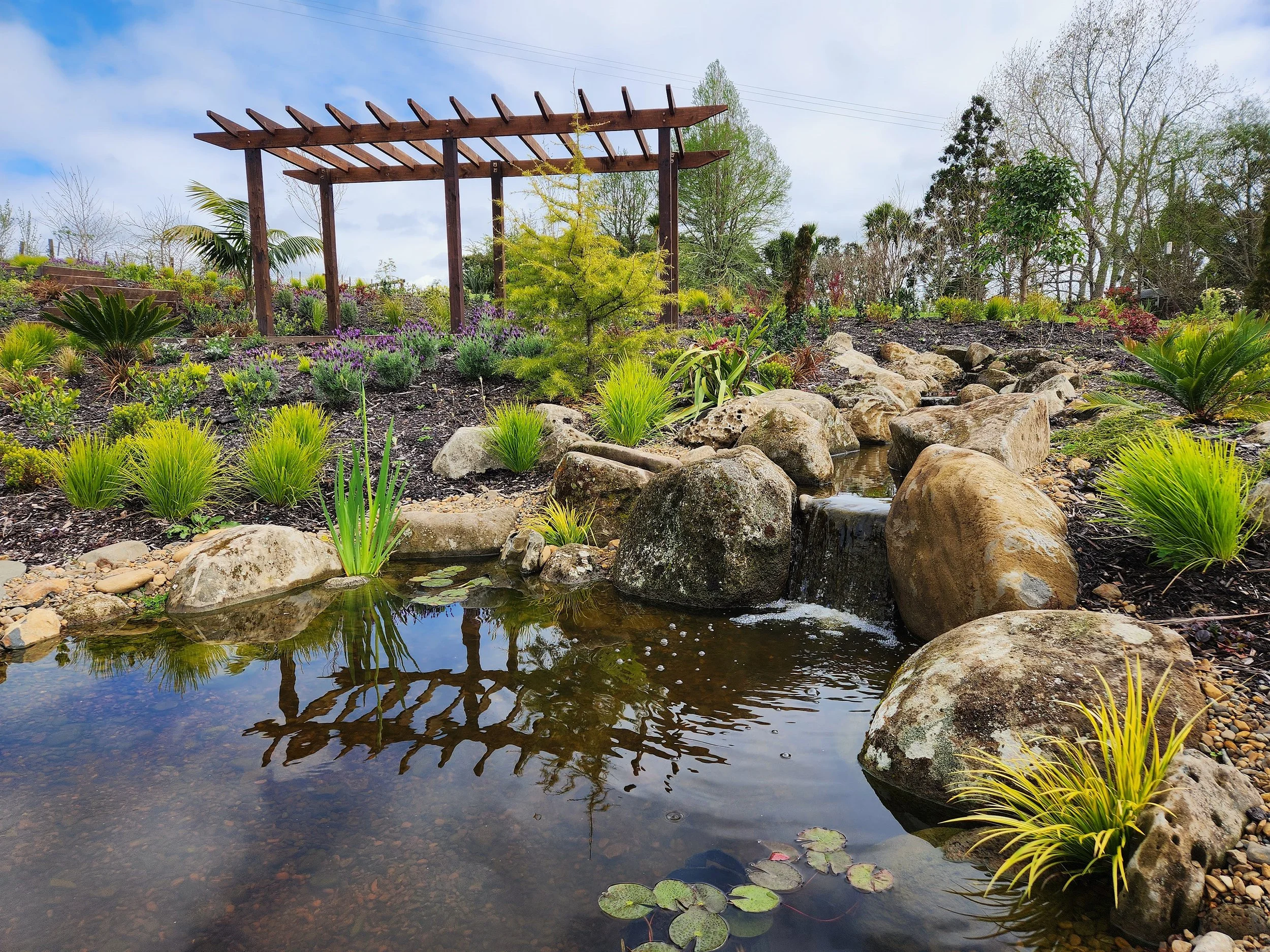
Why Is My Pond Water Green? How to Fix It Naturally
Green pond water is frustrating but fixable. Southern Waterscapes explains why it happens and how to clear it naturally using Aquascape's proven biological approach.
Green pond water is one of the most common questions we get from Canterbury homeowners. It looks alarming, but in most cases it's completely fixable — and once you understand why it happens, it's easy to prevent.
Here's a straightforward guide to why your pond water turns green and how to fix it naturally.
Why Does Pond Water Turn Green?
Green water is caused by a bloom of single-celled algae suspended in the water. These microscopic algae multiply rapidly when conditions favour them — typically when there's too much sunlight, too many nutrients, or not enough biological filtration to keep things in balance.
According to NIWA (Earth Sciences New Zealand), algae use light and nutrients to create plant biomass through photosynthesis, and are a natural part of any freshwater ecosystem - the key is keeping nutrient levels in balance so they don't dominate.
The most common causes are:
Too much direct sunlight — algae thrive in sunlit water with no shade from plants
Excess nutrients — fish waste, uneaten food, and decaying leaves all feed algae growth
New pond syndrome — a recently built pond hasn't established its biological cycle yet
Insufficient filtration — the biological system isn't processing waste fast enough
Overstocked fish — too many fish produce more waste than the system can handle
The good news is that a well-designed ecosystem pond is built to prevent all of these naturally.
How to Fix Green Pond Water Naturally
1. Check Your Filtration System
The first thing to look at is your biological filtration. In an Aquascape ecosystem pond, the BioFalls filter houses beneficial bacteria that break down nutrients and keep water clear. If your BioFalls media hasn't been cleaned in a while, or if the bacteria colony hasn't fully established yet, nutrient levels rise and algae takes advantage.
Check that your BioFalls filter is running freely and that the media is intact. Avoid cleaning it with chlorinated tap water — this kills the beneficial bacteria you need. Use pond water instead.
2. Add Aquascape Beneficial Bacteria
Aquascape's Beneficial Bacteria is one of the most effective natural treatments for green water. It introduces concentrated colonies of beneficial bacteria that compete directly with algae for nutrients — starving the algae out naturally without chemicals.
For ongoing maintenance, Aquascape's SAB Stream & Pond Cleaner works well added regularly throughout the season to keep biological balance stable.
3. Use Aquascape EcoBlast or Algaecide for a Quick Clear
If you need faster results, Aquascape's EcoBlast Contact Algaecide is a granular treatment that targets algae directly on contact. It's safe for fish and plants when used as directed and works quickly to clear a heavy bloom.
Follow this up with a dose of Beneficial Bacteria to rebuild biological balance and prevent the bloom returning.
4. Add More Aquatic Plants
Plants are one of the most powerful natural tools for preventing green water. They compete with algae for the same nutrients — and win, when there are enough of them. Aim for around 40–60% of your pond surface to be covered by floating or marginal plants.
Water lilies are particularly effective as they also shade the water, reducing the sunlight algae need to thrive.
5. Check Your Auto-Dosing System
If your pond was built by Southern Waterscapes, it includes an Aquascape auto-dosing system that continuously delivers beneficial bacteria and water treatments on a programmed schedule. If your water has turned green, check that the dosing unit is full and running correctly — an empty reservoir is a common cause of seasonal algae blooms.

If your pond doesn't currently have an auto-dosing system, it's worth considering adding one. Rather than relying on manual treatments that are easy to forget, an auto-doser delivers consistent, measured doses of beneficial bacteria on a set schedule — keeping biological balance stable year-round without any effort on your part. It's one of the most effective upgrades you can make to an existing pond. Get in touch if you'd like to discuss adding one to your setup.
6. Reduce Fish Feeding
Overfeeding is one of the most overlooked causes of green water. Uneaten food breaks down into nutrients that feed algae. Feed your fish only what they can consume in around two to three minutes, once a day. In cooler Canterbury winters, fish metabolism slows significantly — reduce feeding accordingly.
Will My Pond Clear on Its Own?
Sometimes, yes — particularly in a well-established ecosystem pond. As biological filtration matures over the first one to two seasons, the pond naturally finds its own balance and green water becomes less common. Many clients find their pond runs crystal clear in its second and third year with minimal intervention.
If you've tried the steps above and your water remains persistently green, it may indicate a deeper imbalance — filtration that's undersized for your fish load, or a structural issue with the biological system. In that case, get in touch and we can assess the pond directly.
Prevention Is Easier Than Treatment
The best approach to green water is a pond designed correctly from the start — with the right size filtration for your fish load, appropriate planting, and a proven biological system. Every pond Southern Waterscapes builds uses Aquascape's ecosystem approach specifically because it prevents these problems rather than constantly treating them.
If you're having ongoing green water issues with a pond that wasn't built using ecosystem principles, it may be worth considering a renovation to bring the system into balance properly.
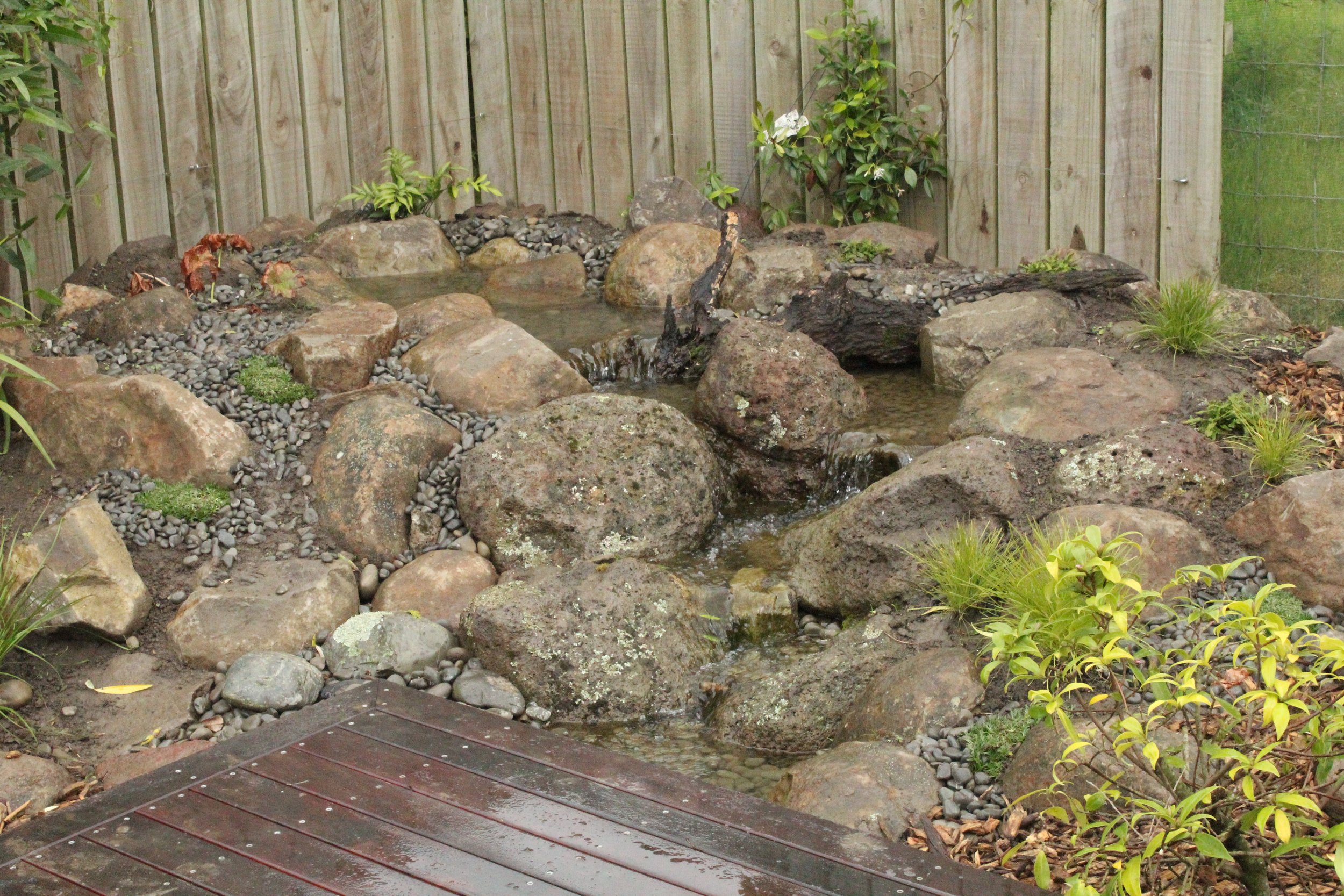
Low-Maintenance Water Features for Small Gardens
Think your section is too small for a water feature? Think again. Some of the most beautiful features we've built are on compact urban sections. Here's what works best for small gardens — and why low maintenance is built into the design from the start.
One of the most common things we hear from Canterbury homeowners is: "I'd love a water feature, but my section is too small."
It's almost never true.
Some of the most beautiful water features we've built are on compact urban sections in Rolleston, Halswell, and Christchurch's newer subdivisions. The key is choosing the right feature for the space — and designing it to work with the garden rather than against it.
Here's what works best for small gardens, and why low maintenance is built into the design from day one.
What Makes a Water Feature Low Maintenance?
The short answer: biology.
Cheap fountain kits and decorative water features fail quickly because they rely on filters that clog, pumps that burn out, and water that turns green without constant chemical treatment.
Aquascape ecosystem features work differently. They use natural biological filtration — beneficial bacteria, aquatic plants, and a properly designed water cycle — to keep the water clean and balanced without constant intervention. The longer they run, the more established the ecosystem becomes, and the less work they need.
That's not marketing language. It's how nature works, and it's why we exclusively build Aquascape features.
The Best Water Features for Small Gardens
Pondless Waterfalls
A pondless waterfall is the most popular choice for compact sections — and for good reason.
Water flows over natural stone and disappears into a hidden underground reservoir, recirculating continuously without any open body of water. There's no pond to maintain, no standing water for mosquitoes, and no safety concern for children or pets.
In terms of footprint, a pondless feature can be as compact as 1.5m × 1.5m while still creating genuine movement and sound. We've built features tucked into corners, along fence lines, and integrated into existing garden beds.
Maintenance is minimal — a quick check every few weeks and an annual service is typically all that's needed.
Small Ecosystem Ponds
A common misconception is that ponds require a large section. In reality, an ecosystem pond can be built from as small as 2.4m × 3m — smaller than a typical suburban garden bed.
A small ecosystem pond brings something a pondless feature can't: fish, aquatic plants, and a genuine living ecosystem. Watching native birds visit, plants establish, and fish grow is something our clients consistently tell us they didn't expect to love as much as they do.
The biological filtration in an Aquascape ecosystem pond means water stays clear naturally. Most small pond owners spend around 15–20 minutes per week on basic upkeep — less time than mowing a lawn of the same footprint.
Spillway Bowls and Fountain Features
For the smallest sections — courtyards, paved areas, or spots where digging isn't practical — a spillway bowl or urn feature is worth considering. Water recirculates through a decorative vessel over stone into a small hidden reservoir below. Minimal footprint & excavation, and genuinely low maintenance.
Designing for a Small Space
A water feature in a small garden needs to earn its place. Here's how we approach compact designs:
Use vertical space. A feature that rises slightly — a small waterfall over stacked stone — draws the eye up and makes a compact garden feel larger, not smaller.
Keep it natural. Angular or geometric features can feel forced in a small garden. Natural stone, organic shapes, and planting that softens the edges will always look more at home.
Sound matters as much as sight. In a small garden, the sound of moving water carries further. A modest feature can fill the whole space with the feeling of a stream or waterfall.
Integrate with existing planting. The best small water features don't sit in isolation — they connect with the garden around them. We design with your existing trees, shrubs, and garden beds in mind.
What About Maintenance in Canterbury's Climate?
Canterbury's hot dry summers increase evaporation, and our cold winters can affect plant selection. We design specifically for local conditions — appropriate pond depth for temperature stability through winter, plant varieties that handle Canterbury frosts, and auto-fill valves that maintain water level without you needing to think about it.
Every Southern Waterscapes build also includes an auto-dosing system that automatically treats the water on a set schedule. You don't need to remember to add treatments — the system does it for you.
Ready to See What's Possible?
If you've been putting off a water feature because you thought your section was too small, it's worth having a conversation. We'll tell you honestly what will and won't work for your space — and if it's not the right fit, we'll say so.
Southern Waterscapes designs and builds custom ecosystem water features across Selwyn, Christchurch, Rolleston, and greater Canterbury. As NZ's only Certified Aquascape Contractor, every build is designed to last and easy to live with.
👉 Get in touch to discuss your garden
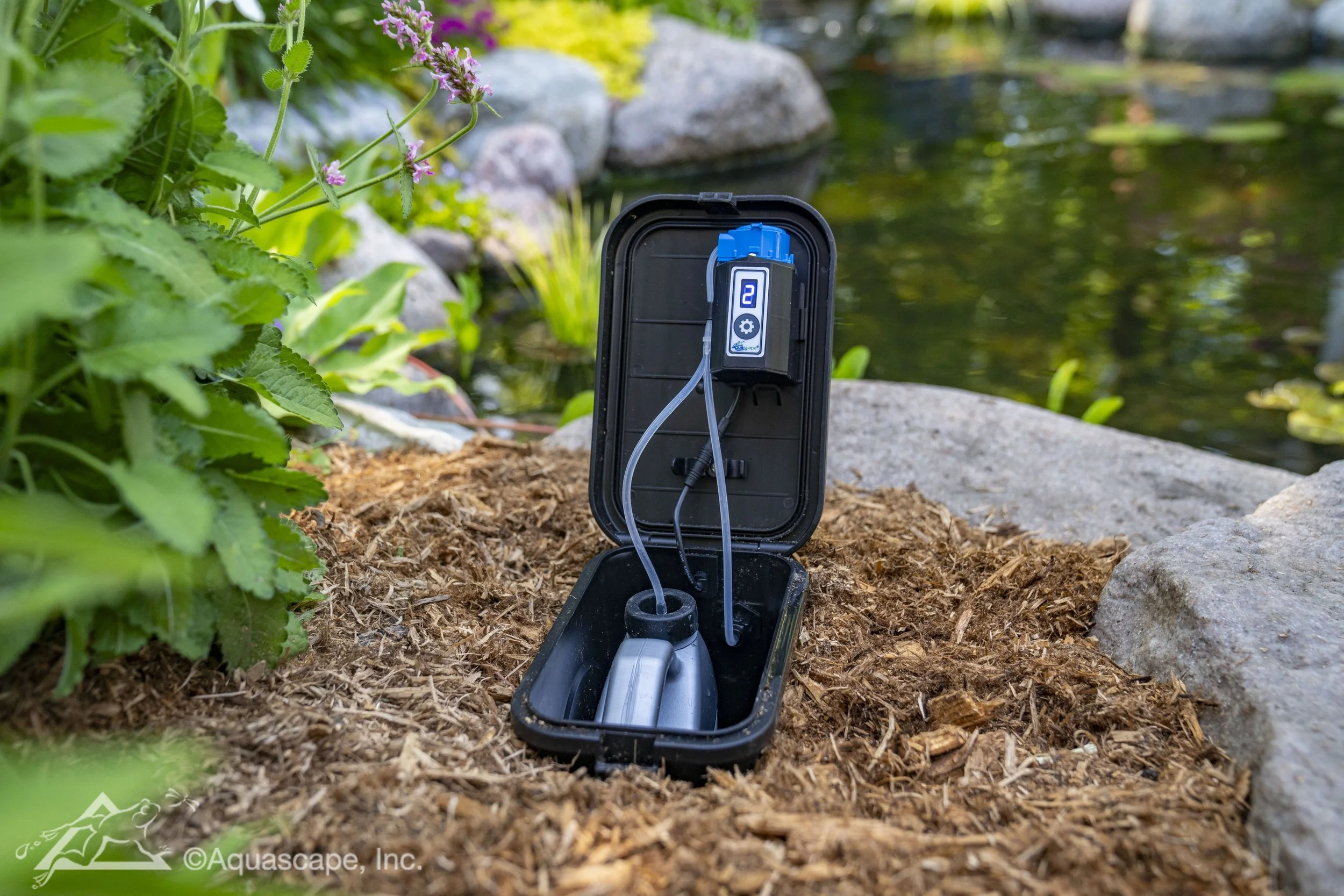
What Is the Aquascape SL Automatic Dosing System?
The Aquascape Dosing System SL takes the guesswork out of pond and water feature maintenance — automatically dosing your water feature twice daily with the right treatment, in the right amount, every day. Here's what it is, how it works, and whether it's right for your setup.
If you've been browsing our water treatment products, you'll have noticed most of them are labelled "SL — Automatic Dosing System." If you're not sure what that means or whether it applies to your setup, this guide explains exactly what the Dosing System SL is, how it works, and who it's for.
What Is the Aquascape Dosing System SL?
The Aquascape Dosing System SL is an electronically operated dispenser that automatically doses micro amounts of specially formulated water treatment your pond or water feature a on a set schedule — twice a day, every day.
Instead of manually measuring and adding treatment each week, the dosing system handles it for you. You insert a 946ml SL treatment bottle, programme the unit for your water volume using the control panel, and it takes care of the rest. Small, consistent doses applied regularly are significantly more effective — and gentler on your pond's ecosystem — than larger doses added manually every week or two.
How Does It Work?
The unit sits beside your water feature and draws treatment from the SL bottle via an intake tube. A small internal pump dispenses a precise dose directly into the water feature twice daily on standard settings, or four times daily if you select the 2X option.
When you first set it up — or when switching to a new treatment bottle — the system needs to prime itself. Hold the 2X button for 3 seconds until the LED flashes and the unit will prime automatically, taking around 10 minutes. It then returns to normal operation on its own.
The control panel is programmed based on your water feature's volume in gallons. Aquascape recommends running the 2X setting for the first two weeks of a new treatment before dropping back to standard dosing.
What's included in the box:
Injection-moulded enclosure and hood
Control panel
Treatment intake assembly
Internal and external treatment tubing
Low-voltage transformer
What Size Water Feature Is It Designed For?
This is an important one. The Dosing System SL is designed for smaller water features up to approximately 8,500 litres. That covers most residential pondless waterfalls, fountains, and small-to-medium ecosystem ponds.
If your water feature is larger than this, the standard SL system won't be sufficient — get in touch and we can advise on the right solution for your setup.
Which SL Products Are Compatible?
All of the following treatments are formulated specifically for the Dosing System SL:
Maintain for Ponds SL — the all-in-one foundation treatment for ecosystem ponds. Combines beneficial bacteria, phosphate binder, flocculant and pond detoxifier. This is what most Southern Waterscapes pond builds are set up to run as the primary treatment.
Clean for Ponds SL — targets organic waste and sludge using heterotrophic bacteria. Works well paired with Maintain for best results.
Clear for Ponds SL— fast-acting clarifier for ponds experiencing persistent cloudiness. Particularly effective when dosed slowly and consistently via the system rather than shock-treating manually.
Clean for Fountains & Waterfalls SL — cleans and clarifies pondless waterfalls, fountains and water features without fish.
Prevent for Fountains & Waterfalls SL — prevents white scale, foam and staining in pondless features. Not suitable for features containing fish.
All SL products can also be added manually without the dosing unit — the SL formulation is a higher-concentration version designed for precise automated dosing, but works perfectly well dosed by hand following the bottle instructions.
Maintenance
The system requires minimal upkeep. When replacing treatment bottles, take a moment to inspect the tubing and clear any debris with a soft pipe cleaner. The internal pump cartridge is a consumable part — it can wear over time and may need replacing if dosing accuracy drops. Contact us if you notice the system isn't performing as expected.
Do I Need the Dosing System?
You don't need it, but it makes a real difference. If your pond or waterfall was built by Southern Waterscapes, the dosing system is something that comes as standard on installation. It's particularly useful if:
You travel regularly or are away from home for extended periods
You want genuinely set-and-forget pond maintenance
You have fish and want consistent water quality without the risk of forgetting a manual dose
If you prefer to dose manually, we stock the full range of the aquascape complete treatments in easy to use pump bottle dosing.
Where Can I Get One?
The Dosing System SL unit is available to order through Southern Waterscapes. Get in touch via the contact page or call 021 035 9451 and we'll confirm the right setup for your feature size and treatment needs.
The SL treatment products are available directly from our online store with NZ-wide delivery.
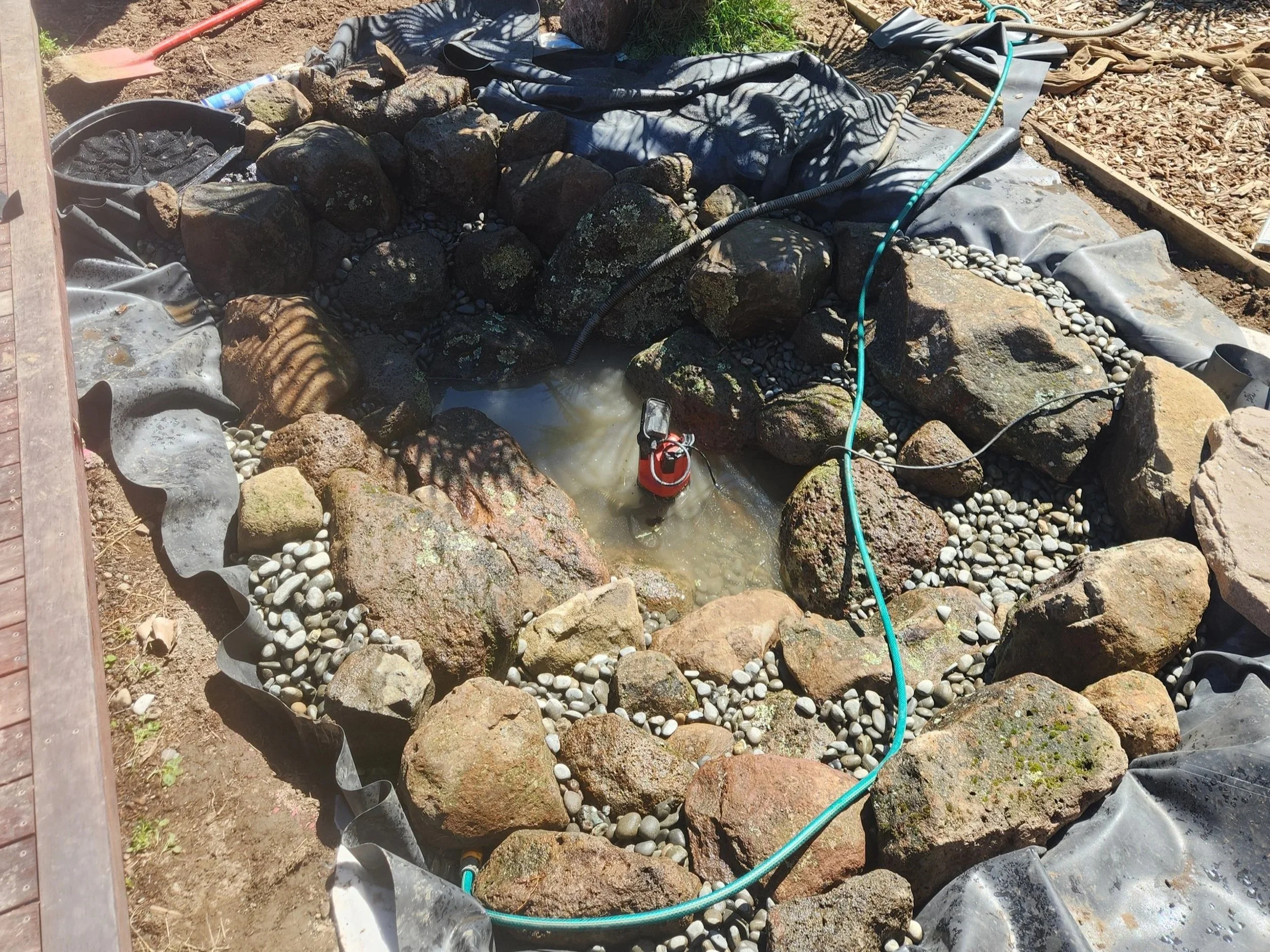
EPDM Pond Liner NZ - What to Know Before You Buy
Planning a pond or pondless waterfall in New Zealand? EPDM liner is one of the most important decisions you'll make. Here's everything you need to know — thickness, sizing, underlay, and where to buy professional-grade liner in NZ.
If you're planning a pond or pondless waterfall in New Zealand, liner is one of the most important decisions you'll make. Get it right and your water feature will last decades. Get it wrong and you'll be digging it all up again.
Here's what you need to know before you buy.
What Is EPDM Pond Liner?
EPDM (Ethylene Propylene Diene Monomer) is a flexible rubber membrane used to waterproof ponds, waterfalls, and streams. It's the professional standard for ecosystem pond construction worldwide - flexible enough to conform to any shape, durable enough to last 20+ years, and safe for fish, plants, and wildlife. For full technical specifications on Firestone ELEVATE EPDM, visit Aquascape Inc who specify this liner across their certified installer network worldwide.
Not all pond liners are equal. Cheaper PVC liners are brittle in cold temperatures, degrade in UV, and crack over time. EPDM doesn't - which is why it's the only liner used in Aquascape ecosystem builds, and the only liner Southern Waterscapes installs.
What Thickness Do You Need?
For residential ponds and pondless waterfalls, 1.14mm (45 mil) is the professional standard. This is the thickness used in every Southern Waterscapes build and the minimum required to qualify for a manufacturer warranty.
Thinner liners (0.75mm / 30 mil) are available and cheaper, but they're more prone to puncture during rock placement and won't qualify for warranty coverage. For a feature you're building to last, don't cut corners on liner thickness.
What Width Do You Need?
EPDM liner is sold in rolls of a fixed width, cut to your required length. Widths available from Southern Waterscapes are:
3.05m wide - suitable for smaller ponds and pondless features
6.10m wide - ideal for medium ponds and larger pondless waterfalls
9.15m wide - for larger ponds requiring wider coverage without a join
12.20m wide - for large-scale features and commercial builds
To calculate how much liner you need, use this formula:
Liner length = pond length + (2 x depth) + 0.6m overlap allowance
Liner width = pond width + (2 x depth) + 0.6m overlap allowance
For example, a pond 3m long x 2m wide x 0.6m deep requires a liner approximately 4.8m x 3.8m - so the 6.10m wide roll cut to 4.8m length would cover it comfortably in one piece.
For a full breakdown of how to calculate your liner size, including a worked example and tips for irregular shapes, see our pond liner sizing guide.
If you'd rather not do the maths manually, our EPDM liner calculator on the product page will size your order automatically - just enter your pond dimensions.
Do You Need Underlay?
Yes - always. Geotextile underlay is laid beneath the liner to protect it from sharp stones, roots, and ground movement. Without underlay, even a small sharp stone can cause a slow leak that's almost impossible to find.
Underlay also plays a role in the Firestone ELEVATE warranty - to qualify for the 20-year warranty, liner must be installed over geotextile underlay and fully covered with rock and pebble. This is standard practice in all Aquascape builds.
Can You Join EPDM Liner?
Yes - EPDM liner can be joined using specialist EPDM tape and bonding adhesive for larger installations where a single piece isn't wide enough. Joins need to be done carefully and ideally on a flat surface before installation. For most residential ponds and pondless waterfalls in New Zealand, choosing the right width roll avoids the need for joins entirely.
What About Sealing Around Rocks and Pipework?
Where liner meets plumbing fittings, skimmer boxes, or BioFalls filters, mechanical fixing plates and EPDM-compatible sealant are used to create a watertight seal. For sealing gaps between rocks and directing water flow, Aquascape Professional Black Waterfall Foam is used - the same foam used on every Southern Waterscapes build.
Where to Buy EPDM Pond Liner in New Zealand
Southern Waterscapes stocks genuine Firestone ELEVATE EPDM pond liner cut to size, available in all four widths. It's the same liner we install in every build - not a cheaper import, but the professional-grade product backed by a 20-year warranty.
We sell to DIY builders, landscapers, and contractors throughout New Zealand. Freight is calculated per order based on size and delivery location.
Order EPDM Pond Liner - Cut to Size
Prefer a Professional Build?
If you'd rather have it done properly from the ground up, Southern Waterscapes designs and builds custom ecosystem ponds and pondless waterfalls across Canterbury, Selwyn, Christchurch, and Waimakariri. As NZ's only Certified Aquascape Contractor, every build uses the same Firestone ELEVATE liner, proper geotextile underlay, and proven Aquascape ecosystem technology.
Southern Waterscapes Ltd - New Zealand's only Certified Aquascape Contractor, based in Rolleston.
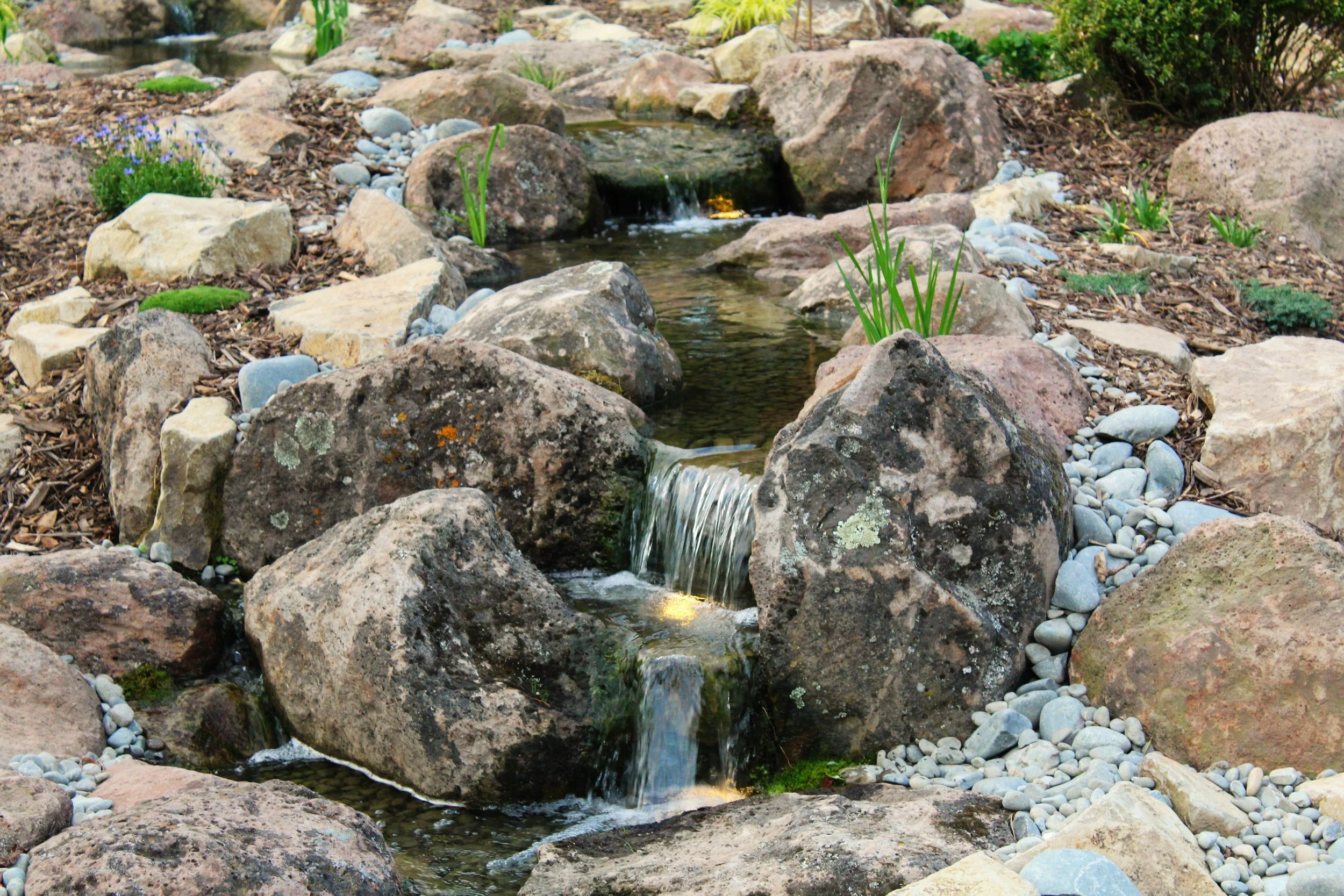
How Much Does a Pondless Waterfall Cost in Canterbury?
Real NZ pricing for custom pondless waterfalls in Canterbury — from entry level to statement features. All prices inc GST from Southern Waterscapes, NZ's only Aquascape Certified Contractor.
Pondless waterfalls in Canterbury start from $13,500 for a small feature (approx. 3 metre stream), $22,425 for a medium feature (approx. 5 metre stream), and $46,575 for a large feature (approx. 8 metre stream). All prices include GST and are based on standard site access and Oxford Boulder rock. Every build is custom-quoted after a site visit.
If you've been thinking about adding a pondless waterfall to your Canterbury garden, pricing is usually the first question. And like most things in the trades, it's not always easy to find a straight answer online.
At Southern Waterscapes we believe in being upfront about cost. Here's what a professionally built pondless waterfall actually costs in Canterbury — based on our real pricing, inc GST.
What Affects the Cost of a Pondless Waterfall?
Before the numbers, it helps to understand what drives pricing. The main factors are:
Stream length — the longer the feature, the more rock, liner, and labour required
Rock type — Oxford Boulder is standard; premium stone costs more
Add-ons — lighting, auto-dosing, automatic fill valves
Site access — tight or difficult access adds time and cost
Every pondless waterfall we build is custom — but we work from proven size tiers that give most Canterbury homeowners a reliable starting point.
Pondless Waterfall Pricing in Canterbury
All prices below are inc GST, based on Oxford Boulder rock and standard site access.
Small Pondless Waterfall — from $13,500 Approximately 3 metre stream. An entry-level feature that still delivers real impact — the sound and movement of flowing water without an open pond. Installed in around 2 days.
Medium Pondless Waterfall — from $22,425 Approximately 5 metre stream. Our most popular size across Selwyn and Christchurch. A fully established natural-looking stream that becomes a real garden focal point. Installed in around 3 days.
Large Pondless Waterfall — from $46,575 Approximately 8 metre stream. A statement feature for larger properties — the kind that stops people in their tracks. Installed in around 6 days.
What's Included in Every Build?
Every Southern Waterscapes pondless waterfall includes:
Aquascape pump, reservoir and spillway system
Firestone EPDM liner — lifetime guarantee
Geotextile underlay
Oxford Boulder rock
Auto-fill valve — maintains water level automatically
Auto-dosing system — keeps water clear without chemicals
LED lighting package with digital timer
All labour — installed by specialist water feature builders, not general landscapers
There are no hidden extras. What you're quoted is what you pay.
How Much Does a Pondless Waterfall Cost to Run?
Running costs are lower than most people expect — approximately $30–60 per month in electricity depending on feature size. Large features use a variable speed pump that adjusts automatically.
What About Rock Upgrades?
Our base pricing uses Oxford Boulder, which suits most Canterbury gardens well. If you'd prefer a different aesthetic, we also offer:
Hapuku Boulder — a mid-range upgrade with a different character
Alpine Schist — a premium layered stone with a distinctive South Island feel
Rock upgrades are priced on top of the base build cost depending on feature size.
Is a Pondless Waterfall High Maintenance?
No — and this is one of the main reasons they're so popular with Canterbury families. The auto-fill valve maintains water level automatically, the auto-dosing system keeps the water balanced, and there's no pond to clean or fish to care for. We recommend an annual service to keep everything running at its best, and a monthly check of the pump basket.
Is a Pondless Waterfall Safe for Children?
Yes — this is one of the biggest advantages over a traditional pond. Because there's no open body of water, pondless waterfalls are one of the safest water features for family gardens. Water flows over stone and disappears into a hidden underground reservoir, so there's no depth for children to fall into.
Do I Need Council Consent?
For most residential pondless waterfalls in Canterbury, no consent is required. We'll let you know if your specific site is different.
Thinking About a Pondless Waterfall for Your Canterbury Garden?
Every build starts with a conversation about your space, your goals, and what will work best for your property. Get in touch to discuss your project — we work across Selwyn, Christchurch, Waimakariri and greater Canterbury.
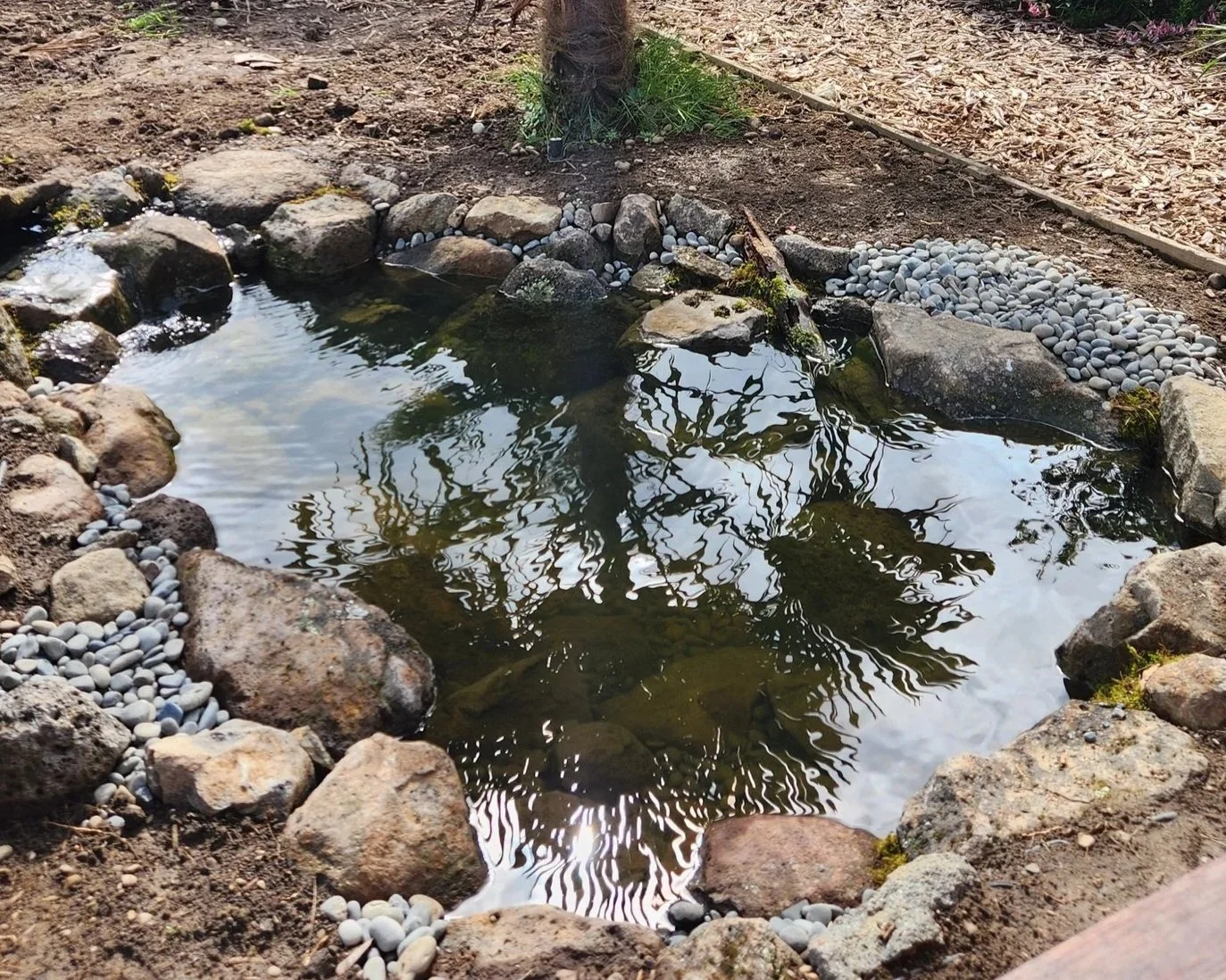
How Much Does a Garden Pond Cost in Canterbury?
Wondering what a garden pond costs in Canterbury? Southern Waterscapes breaks down real NZ pricing for eco-system ponds - from small to large. All prices inc GST.
Ecosystem ponds in Canterbury start from $15,500 for a small pond (2.4m x 3.3m), $27,600 for a medium pond (3.3m x 4.8m), and $67,850 for a large pond (6.4m x 7.9m). All prices include GST and are based on standard site access and Oxford Boulder rock. Every build is custom-quoted after a site visit.
If you've been thinking about adding a pond to your Canterbury garden, pricing is usually the first question. It's also one of the hardest to answer online - most websites either avoid the topic entirely or give vague ranges that don't reflect real NZ costs.
At Southern Waterscapes, we believe in being upfront. Here's what a professionally built eco-system pond actually costs in Canterbury - based on our real pricing, inc GST.
What Affects the Cost of a Garden Pond?
Before the numbers, it helps to understand what drives pricing. The main factors are:
Size — the biggest driver by far
Rock type — Oxford Basalt is standard; premium stone costs more
Add-ons — lighting, wetland filters, intake bays
Site access — tight access or difficult terrain adds time
Every pond we build is custom — but we work from a set of proven size tiers that give most Canterbury homeowners a reliable starting point.
Eco-System Pond Pricing in Canterbury
All prices below are inc GST, based on Oxford Boulder rock and standard site access.
Small Pond — from $15,500 2.4m × 3.3m, 0.6m deep. A compact but fully functional ecosystem pond. Ideal for smaller Selwyn and Christchurch sections. Installed in around 2.5 days.
Medium Pond — from $27,600 3.3m × 4.8m, 0.6m deep. Our most popular size for Canterbury family homes. A complete ecosystem with room for fish, plants and wildlife. Installed in around 3.5 days.
Large Pond — from $67,850 6.4m × 7.9m, 0.6m deep. A premium statement feature for larger properties. Installed in around 8.5 days.
What's Included in Every Build?
Every Southern Waterscapes pond includes:
Aquascape pump, filter, skimmer and spillway
Firestone EPDM liner — lifetime guarantee
Geotextile underlay
Oxford Basalt rock
Auto-fill valve — maintains water level automatically
Auto-dosing system — keeps water clear without chemicals
LED lighting package with digital timer
Aquatic plants — marginals and lilies
All labour — professionally trained in water feature construction
How Much Does a Pond Cost to Run?
Running costs are lower than most people expect - approximately $30–$60 per month in electricity. Large features use a variable speed pump that adjusts automatically, keeping running costs down year-round.
Do I Need Council Consent?
For most residential garden ponds in Canterbury, the answer is no. Council consent is generally not required. We'll let you know if your specific site is different.
What About Rock Type?
Our base pricing uses Oxford Basalt, which is our standard and suits most Canterbury gardens well. If you'd prefer a different look, we also offer:
Hapuku Boulder — a mid-range upgrade
Alpine Schist — a premium option with a distinctive layered appearance
Rock upgrades are priced on top of the base build cost and depend on feature size.
Is an Ecosystem Pond High Maintenance?
No — and this surprises most of our clients. A well-built ecosystem pond is largely self-managing. The auto-fill valve maintains water level, the auto-dosing system keeps the water balanced, and the biological filtration handles itself as the ecosystem matures. We recommend an annual service to keep everything running at its best, and a monthly check of the skimmer basket.
The longer your pond is established, the better it performs — beneficial bacteria, plants and wildlife create a naturally balanced system that improves every year.
Thinking About a Pond for Your Canterbury Garden?
Every build starts with a conversation about your space, your goals, and what will work best for your property. Get in touch to discuss your project — we work across Selwyn, Christchurch, and greater Canterbury.
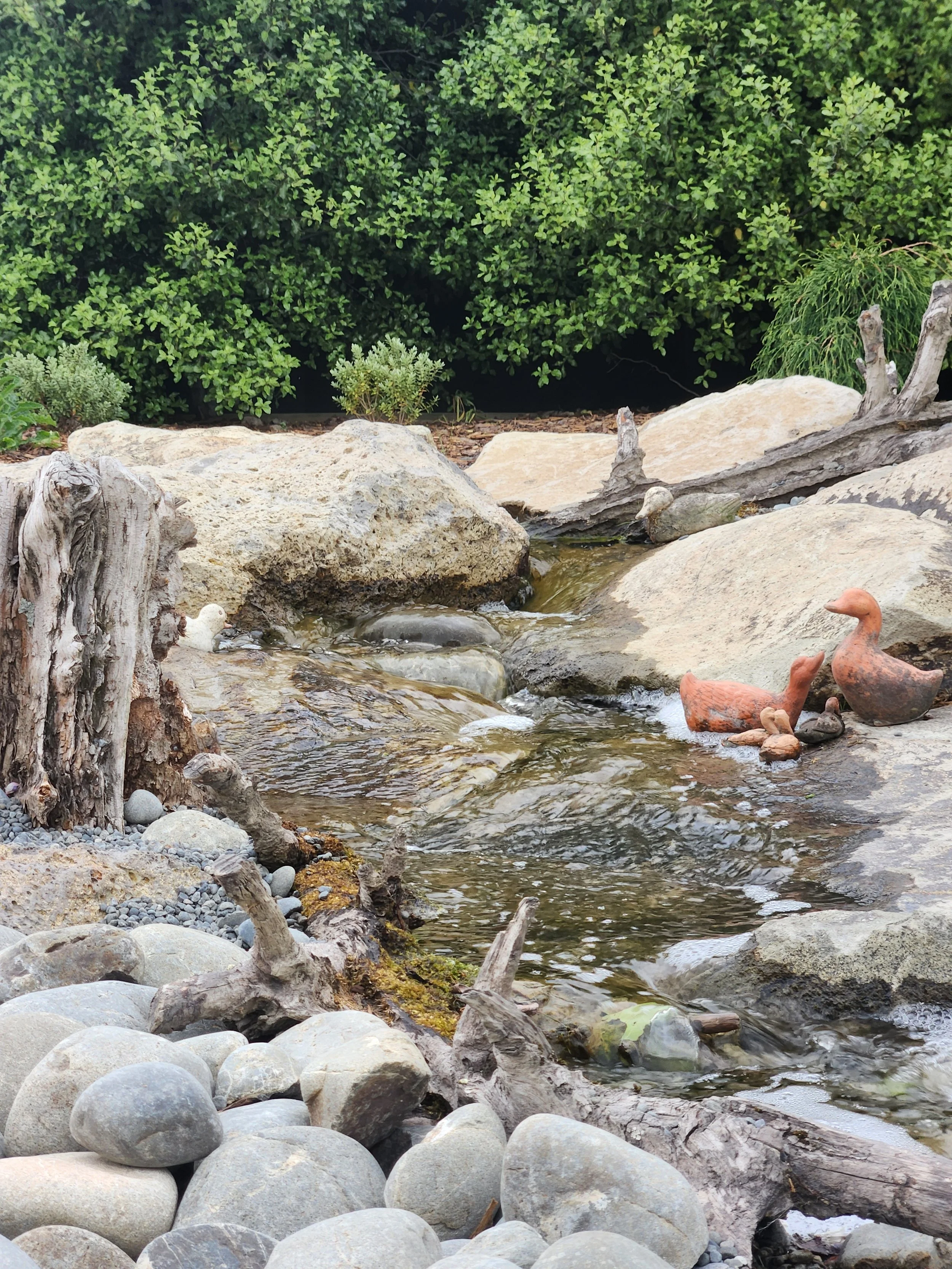
Pond vs Pondless Waterfall
Which Is Best for Your Canterbury Garden?
When adding a water feature to your garden, one of the most common questions we’re asked is:
Should I choose a pond or a pondless waterfall?
Both options can transform an outdoor space, but they suit different lifestyles, garden sizes, and maintenance preferences - especially here in Canterbury.
In this guide, we’ll break down the key differences between garden ponds and pondless waterfalls to help you decide which is right for your home.
What Is a Garden Pond?
A garden pond is a self-contained ecosystem featuring still water, aquatic plants, and often fish. When designed correctly, ponds become a natural focal point and support wildlife while blending seamlessly into the surrounding landscape.
Benefits of a Garden Pond
Creates a calm, reflective water feature
Supports fish and aquatic plants
Encourages birds and beneficial wildlife
Becomes more natural and established over time
Things to Consider
Requires regular maintenance to keep water clear
Safety considerations for young children
Best suited to medium-to-large gardens
Garden ponds are ideal for homeowners who enjoy an evolving, living feature and don’t mind a little hands-on care.
What Is a Pondless Waterfall?
A pondless waterfall delivers the sound and movement of flowing water without an open pond. Water flows over natural stone into a hidden underground reservoir, where it’s recirculated through the system.
This makes pondless waterfalls one of the most popular water features we install across Selwyn, Rolleston, and Christchurch.
Benefits of a Pondless Waterfall
Low maintenance compared to ponds
No standing water - safer for families
Flexible design for small or sloped gardens
Strong visual impact with minimal upkeep
Things to Consider
No fish and limited aquatic planting
Focus is on sound and movement rather than still water
Pondless waterfalls are perfect for homeowners who want the beauty of water without ongoing maintenance.
Which Water Feature Works Best in Canterbury?
Canterbury’s climate makes both ponds and pondless waterfalls viable options, but the best choice depends on how you use your garden.
Choose a pond if:
You want a natural ecosystem, enjoy fish and plants, and see the garden as a long-term project.Choose a pondless waterfall if:
You want a striking feature, minimal maintenance, and a safer option for family homes.
Many of our clients choose pondless waterfalls for modern Canterbury gardens, while ponds are often preferred for larger, established landscapes.
| Pondless Waterfall | Ecosystem Pond | |
|---|---|---|
| Starting price | From $13,500 | From $15,500 |
| Maintenance | Low | Low–Medium |
| Safe for children | Yes | Supervision recommended |
| Fish & plants | Limited | Yes |
| Space needed | Small–Large | Medium–Large |
| Wildlife habitat | Good | Excellent |
| Visual effect | Movement & sound | Reflective & immersive |
Expert Design Makes the Difference
Whether you choose a pond or a pondless waterfall, professional design and installation are essential. Proper filtration, stone placement, and water flow ensure your feature looks natural and performs well year-round.
At Southern Waterscapes, we design and build custom water features tailored to Canterbury conditions, ensuring they enhance your garden and stand the test of time.
Thinking About Adding a Water Feature?
If you’re considering a pond or pondless waterfall in Canterbury, we’d be happy to help you explore the best option for your space.
👉 Get in touch to discuss your garden and see how a custom water feature could transform it.
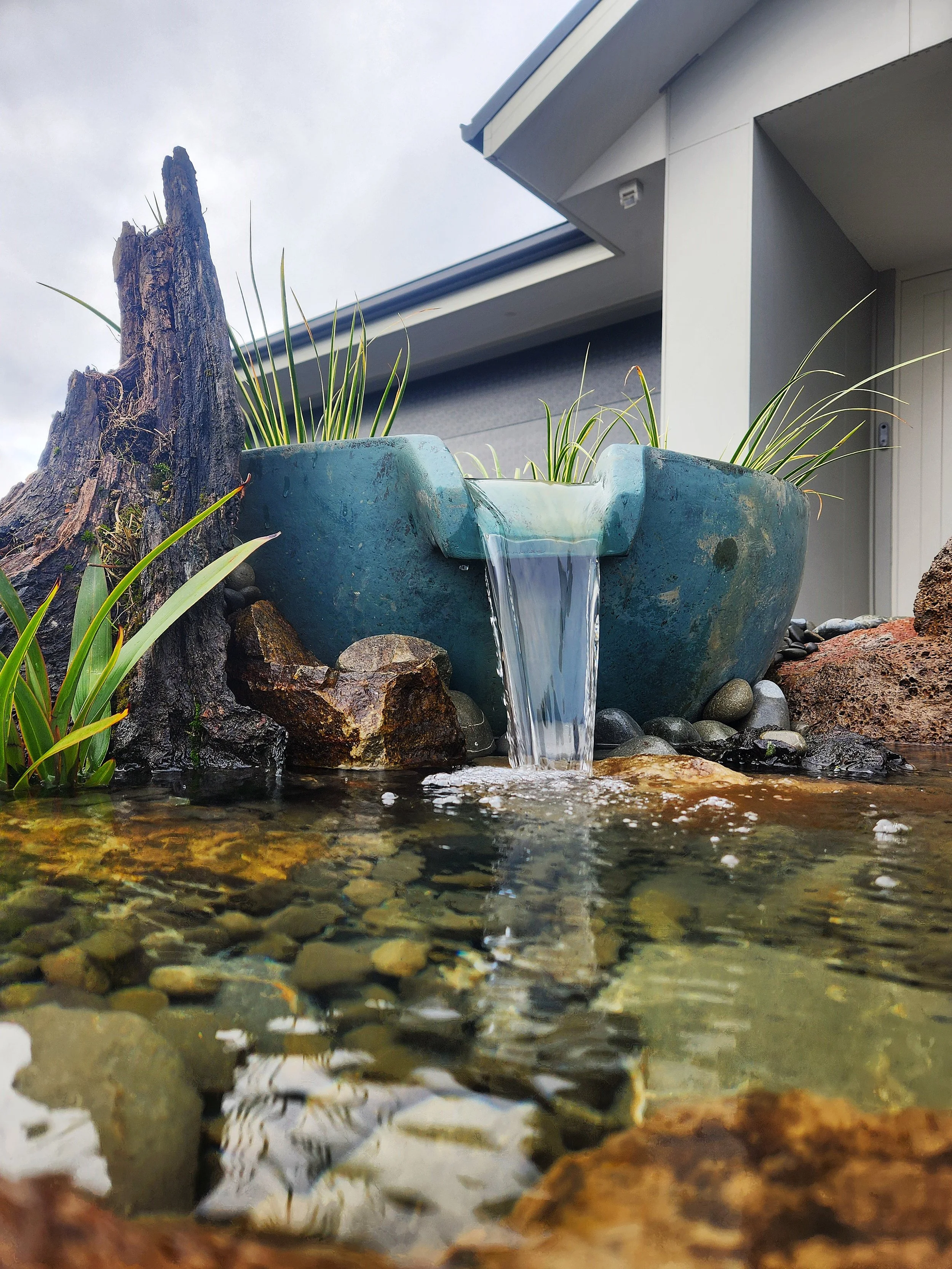
Why Ecosystem Water Features Are Perfect for Selwyn & Christchurch Gardens
Discover why eco-system water features are perfect for Selwyn and Christchurch gardens. Natural, low-maintenance, and designed to thrive in Canterbury conditions.
Introduction
Imagine stepping into your backyard in Rolleston, Lincoln, or Christchurch and hearing the gentle flow of water, seeing crystal-clear streams weaving through lush plants, and spotting birds, frogs, and insects enjoying the space alongside you. That’s the beauty of ecosystem water features — sustainable, low-maintenance water systems designed to thrive in Canterbury gardens.
At Southern Waterscapes, we design and build custom ponds & Pondless waterfalls across Selwyn and Christchurch, all based on natural biology and proven systems. Here’s why they’re one of the best outdoor upgrades for your home.
1. Works With Nature, Not Against It
Unlike conventional water features that rely on harsh chemicals, ecosystem water features use natural biology and filtration. Beneficial bacteria, aquatic plants, and biological filters keep your water healthy and clear — no toxic treatments needed.
This approach is perfect for Selwyn and Christchurch, where many homeowners want gardens that are both low-maintenance and environmentally friendly.
2. Low Maintenance, High Enjoyment
One of the biggest worries we hear from clients in Christchurch and Selwyn is: “Will I be stuck cleaning it all the time?”
With an ecosystem water feature, the answer is no. These systems are designed to stay balanced naturally, which means less time maintaining and more time enjoying your outdoor space. In fact, the longer your feature is established, the better it becomes — as the ecosystem matures, beneficial bacteria, plants, and wildlife create a thriving, self-sustaining balance.
3. A Habitat for Local Wildlife
Our Canterbury gardens are full of life — from birds to insects to native plants. Ecosystem ponds and streams encourage biodiversity, turning your backyard into a mini nature reserve. You’re not just adding a feature, you’re creating a healthy environment for local wildlife.
4. Designed for Your Space
Every Selwyn and Christchurch property is unique, so we tailor designs to fit:
Pondless Waterfalls – flowing water without standing ponds, ideal for family-friendly backyards.
Streams & Cascades – water movement weaving naturally through your garden.
Eco-system Ponds – peaceful garden ecosystems with fish, plants, and crystal-clear water working together in balance.
5. Trusted Systems, Local Expertise
We use Aquascape’s proven system, developed over 20+ years and trusted worldwide, so you can enjoy water features that are reliable and easy to care for. Combined with Southern Waterscapes’ experience in Selwyn and Christchurch, you get the best of both worlds: proven technology and a design customised for Canterbury conditions.
6. Why Choose Southern Waterscapes?
We’re based in Selwyn and work throughout Christchurch and surrounding areas.
We specialise in natural waterfeatures.
Every design is custom-built to your property and your lifestyle.
We bring local knowledge of Canterbury soils, climate, and planting to every project.
Your Local Experts in Natural Water Features
If you’re in Selwyn, Rolleston, Lincoln, or Christchurch and want to bring the soothing sound of water into your garden, an ecosystem water feature is the perfect choice. They’re natural, low-maintenance, and designed to thrive in our local conditions.
📞 Call Southern Waterscapes today or send us a message to book a consultation. Let’s create a water feature that brings balance, beauty, and life to your garden.